History Curriculum/Book 21
Book twenty-one of the curriculum
The History of the Progressive Era
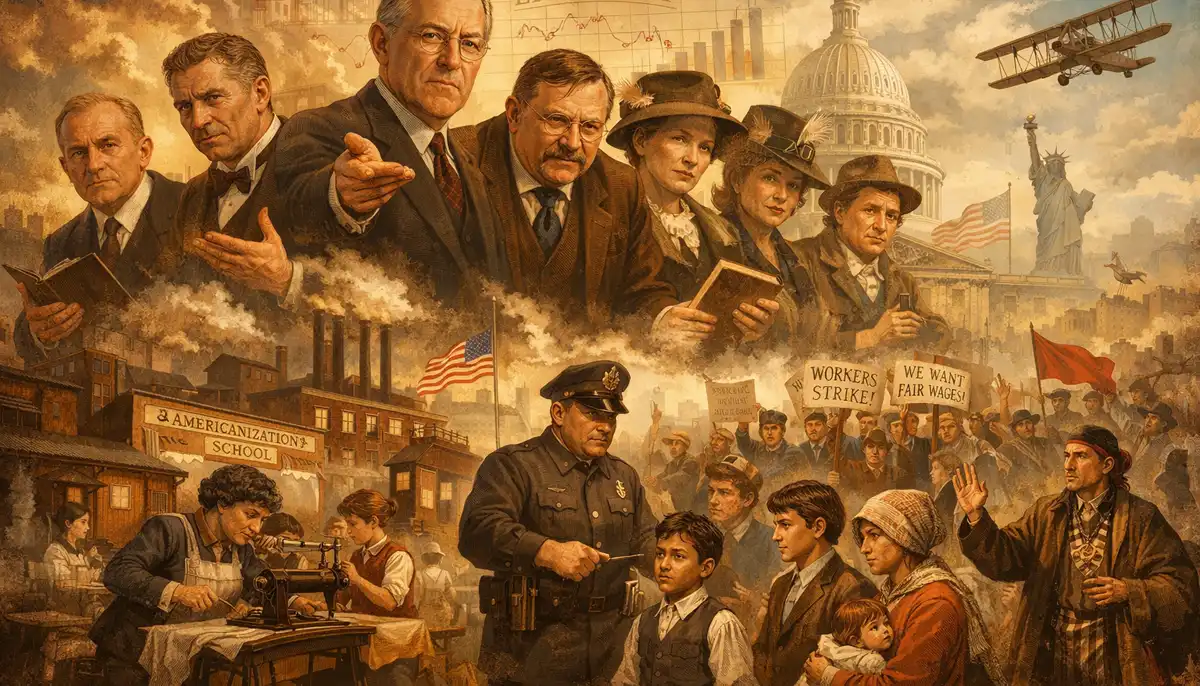
The twenty-first book in the curriculum and the third of the Late American History set. Eighteen chapters across four weeks — first the problems the reformers set out to solve: the tenements and factories of the new industrial cities, the political machines, the laws of segregation, the farmers' grievances and adulterated food; then the reformers and what they did: the muckraking magazines, the antitrust suits, the labor and child-labor laws, the suffrage campaigns and the conservation of forests and parks; then the reforms the Guide groups as going too far: eugenics and the sterilization laws, the immigration acts, the wartime Espionage and Sedition Acts, and Prohibition; and last segregation within the reform era, the reformers who wrote that experts should guide the public, and the amendments that widened the vote, ending with the Nineteenth in 1920. TWO THINGS TO KNOW BEFORE YOU START. First, the first-person accounts in both printed editions are HISTORICAL FICTION — written to tell the story, informed by the surviving record, and not the words of the people named. Most narrators are real people, but some speak of things that happened after they died, a few are invented, and some meet in scenes that never took place. The record itself is very large: the laws and amendments, the Supreme Court's opinions and dissents, the reports of Congress and of commissions, the reformers' and their opponents' own books and articles, the census and the photographs of Jacob Riis and Lewis Hine — and this course quotes them. Second, at the back of the Ultimate Guide, after the chapters (pages 355–391), there are Cross-Curricular sections — Math, Science, Health, Social Studies and English — and questions with answer keys, to use alongside this course. They are not a fifth week and there is nothing to hand in for them.
Read the book
Turn the pages of both editions right here. Progressive Era is a members’ book: subscribers and Adventure Box Course families read every page.
🔒 A members’ book — Living History 339 pages, Standard Book 391 pages. Subscribe, or buy an Adventure Box, to read it.
4 Weeks, 18 Chapters, Choose 8+ to Read
Pick the chapters you want to read each week. The living books and the sources are one click away.
Pick two or more of these chapters to read. Finish two of the ones you choose to open Week 2.
K–5th Grade
6th–8th Grade
9th–12th Grade
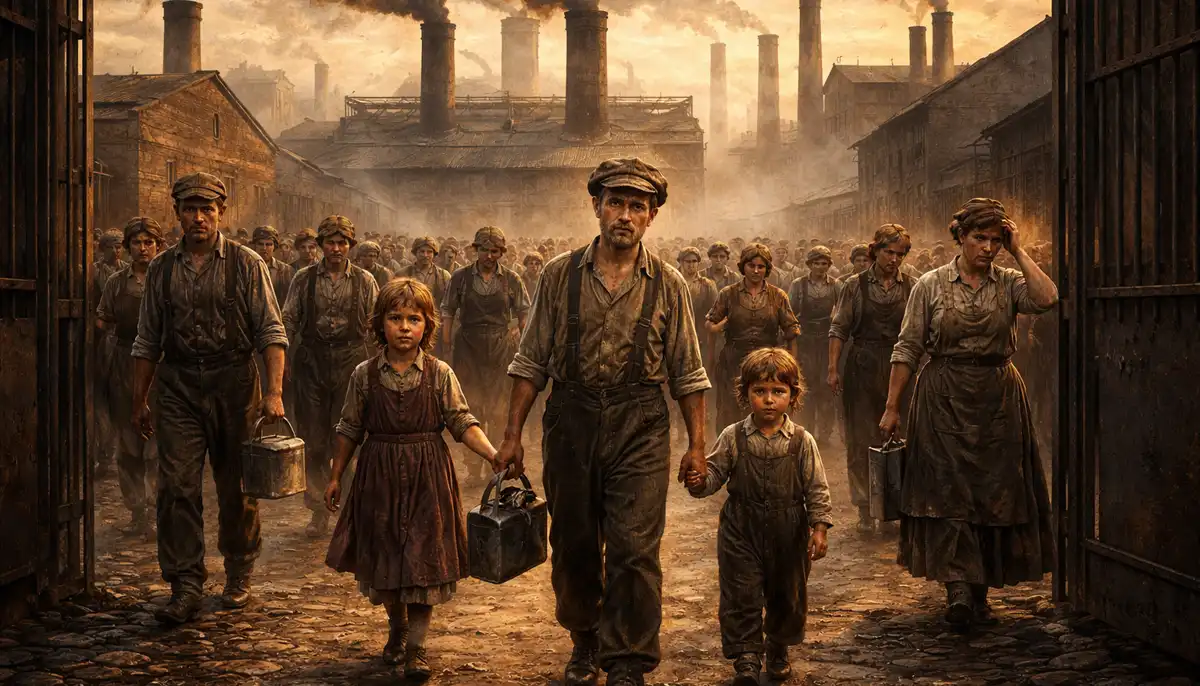
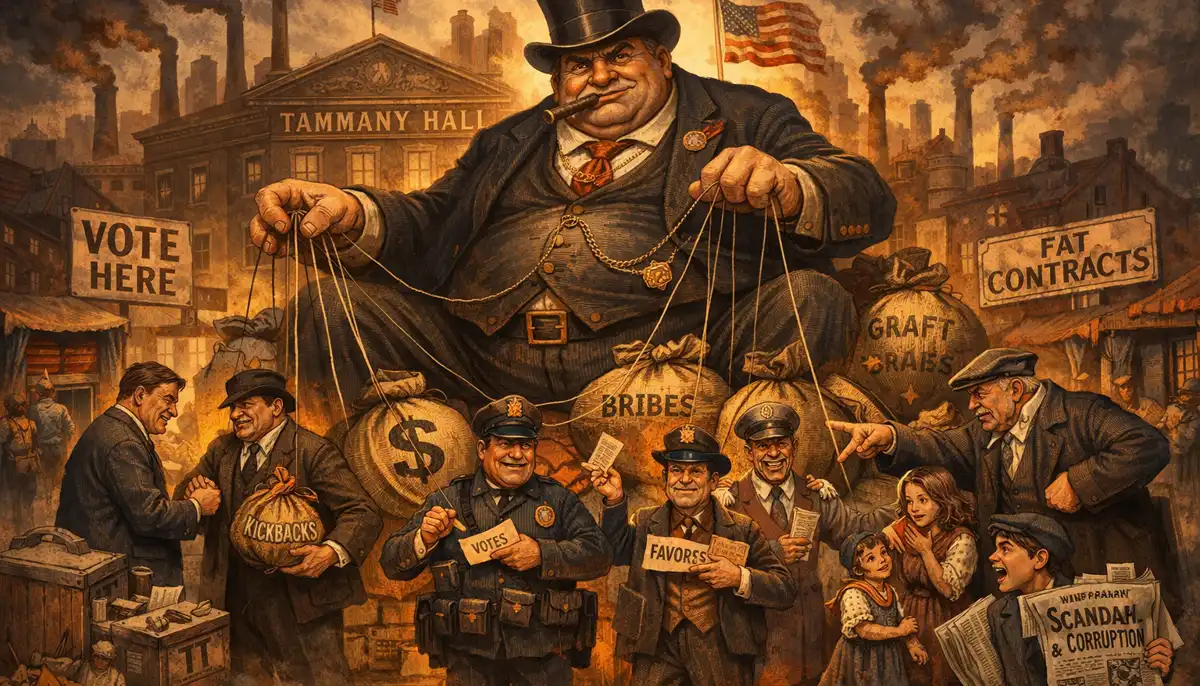
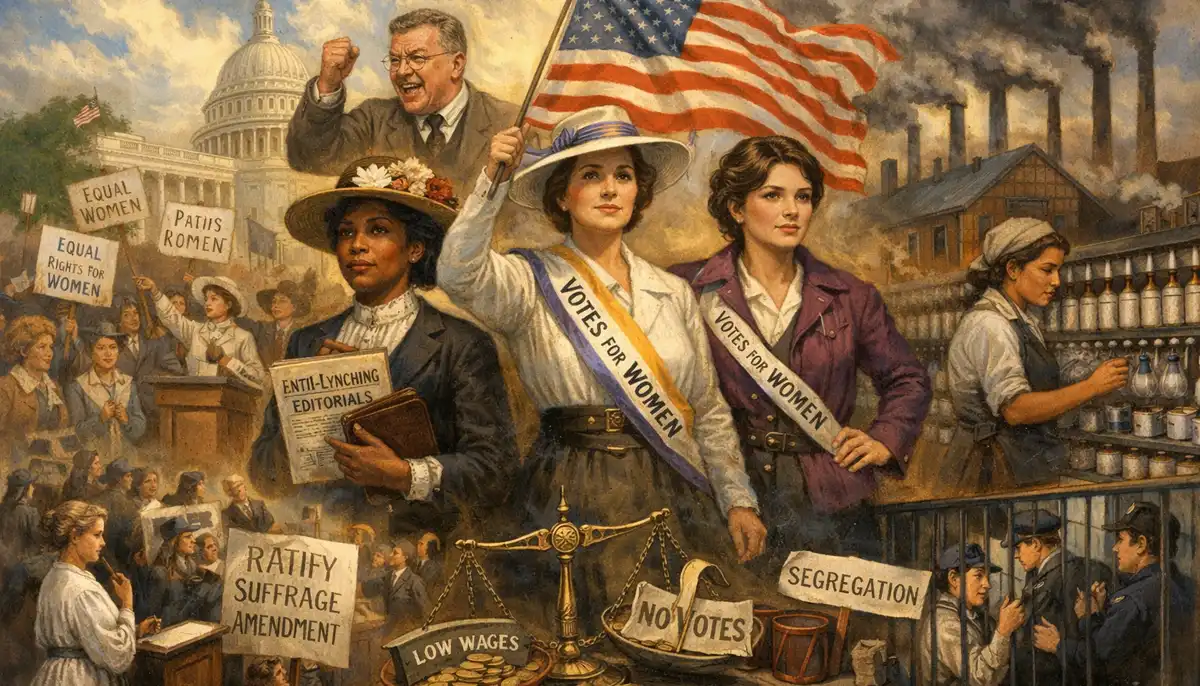
Tenements and Bosses
- Jacob A. Riis, How the Other Half Lives: Studies Among the Tenements of New York New York: Charles Scribner's Sons, 1890A police reporter's book on the tenements of lower Manhattan, with his photographs drawn as illustrations. It opens: "Long ago it was said that 'one half of the world does not know how the other half lives.'" Riis counted the tenements as housing three-fourths of the city: "The tenements to-day are New York." Look at the list of illustrations, then read one chapter, such as "Bandits' Roost."
- Jane Addams, Twenty Years at Hull-House, with Autobiographical Notes New York: Macmillan, 1910The founder's own account of the settlement house she opened in a Chicago immigrant ward: "On the 18th of September, 1889, Miss Starr and I moved into it." Read what the neighbors asked of Hull-House and what the residents tried in answer — a nursery, clubs, classes, investigations of the ward.
- Lincoln Steffens, The Shame of the Cities New York: McClure, Phillips & Co., 1904 (articles from McClure's Magazine, 1902–1903)A reporter's articles on city governments — St. Louis, Minneapolis, Pittsburgh, Philadelphia, Chicago, New York — collected with his introduction. His conclusion: "The misgovernment of the American people is misgovernment by the American people." Start with "Tweed Days in St. Louis."
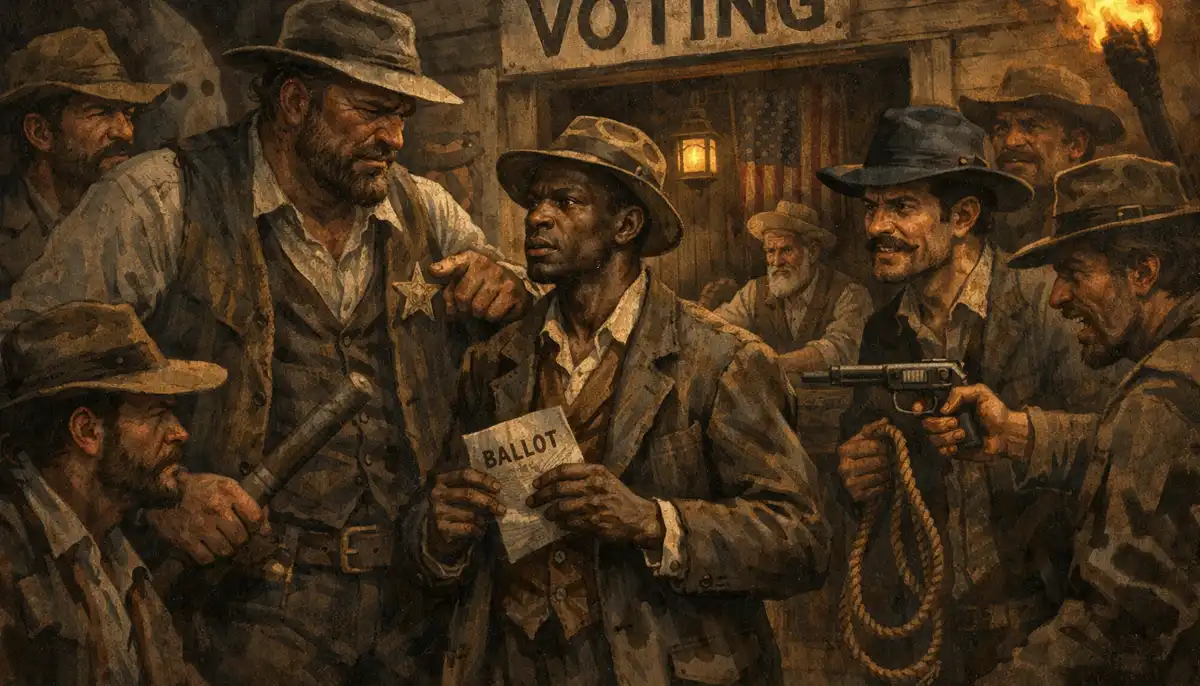
The Color Line and the Country
- Plessy v. Ferguson (with Justice Harlan's dissent) 163 U.S. 537, decided 18 May 1896The Court upheld Louisiana's law requiring railways to provide "equal but separate accommodations for the white, and colored races." Justice Harlan, alone in dissent: "Our constitution is color-blind, and neither knows nor tolerates classes among citizens." Read both opinions.
- W. E. B. Du Bois, The Souls of Black Folk Chicago: A. C. McClurg & Co., 1903Essays by the Atlanta University professor. Chapter II opens: "The problem of the twentieth century is the problem of the color-line." Chapter III, "Of Mr. Booker T. Washington and Others," answers the Atlanta address directly. Read the two men in their own words, side by side.
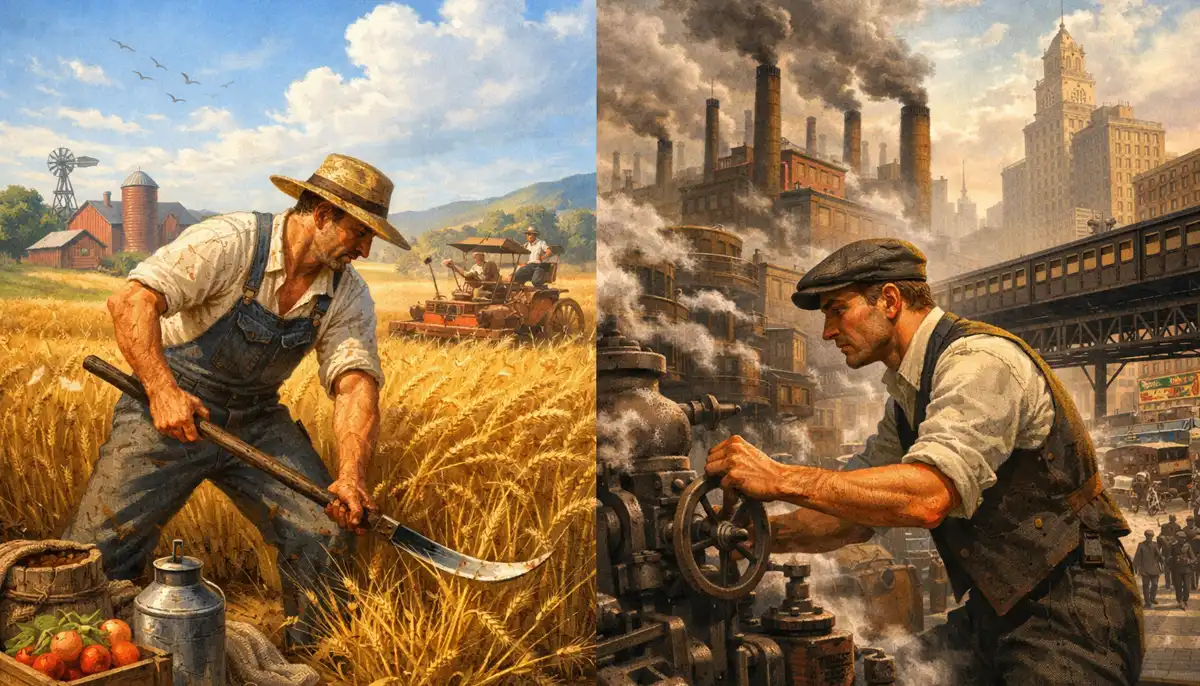
- Theodore Roosevelt, Special Message transmitting the report of the Commission on Country Life 9 February 1909"Not a dollar of the public money has been paid to any commissioner for his work on the commission." Roosevelt reports "thirty public hearings, to which farmers and farmers' wives from forty states and territories came," and "120,000 answers to printed questions," and that the commission found "the general level of country life is high compared with any preceding time." Read what he says is still wanting.
What Was in the Food
- Theodore Roosevelt, Special Message transmitting the report of James Bronson Reynolds and Charles P. Neill on the Chicago stockyards 4 June 1906Roosevelt sent Congress the report of the two men he had sent to Chicago after The Jungle appeared: "The conditions shown by even this short inspection to exist in the Chicago stock yards are revolting." "Under the existing law it is wholly impossible to secure satisfactory results."
- J. Ogden Armour, The Packers, the Private Car Lines, and the People Philadelphia: Henry Altemus Co., 1906The head of Armour & Company answers the charges against the packing houses in his own words (first printed in The Saturday Evening Post, 1906): "in Armour & Co.'s business not one atom of any condemned animal or carcass finds its way, directly or indirectly, from any source, into any food-product or food-ingredient." Read it beside the Neill–Reynolds report.
- The Pure Food and Drug Act ("An Act for preventing the manufacture, sale, or transportation of adulterated or misbranded or poisonous or deleterious foods, drugs, medicines, and liquors") 34 Stat. 768, approved 30 June 1906The act as printed in the Statutes at Large. Read its sections defining when a food or drug is "adulterated" and when it is "misbranded", and which department was to examine samples (the Bureau of Chemistry of the Department of Agriculture).
Pick two or more of these chapters to read. Finish two of the ones you choose to open Week 3.
K–5th Grade
6th–8th Grade
9th–12th Grade
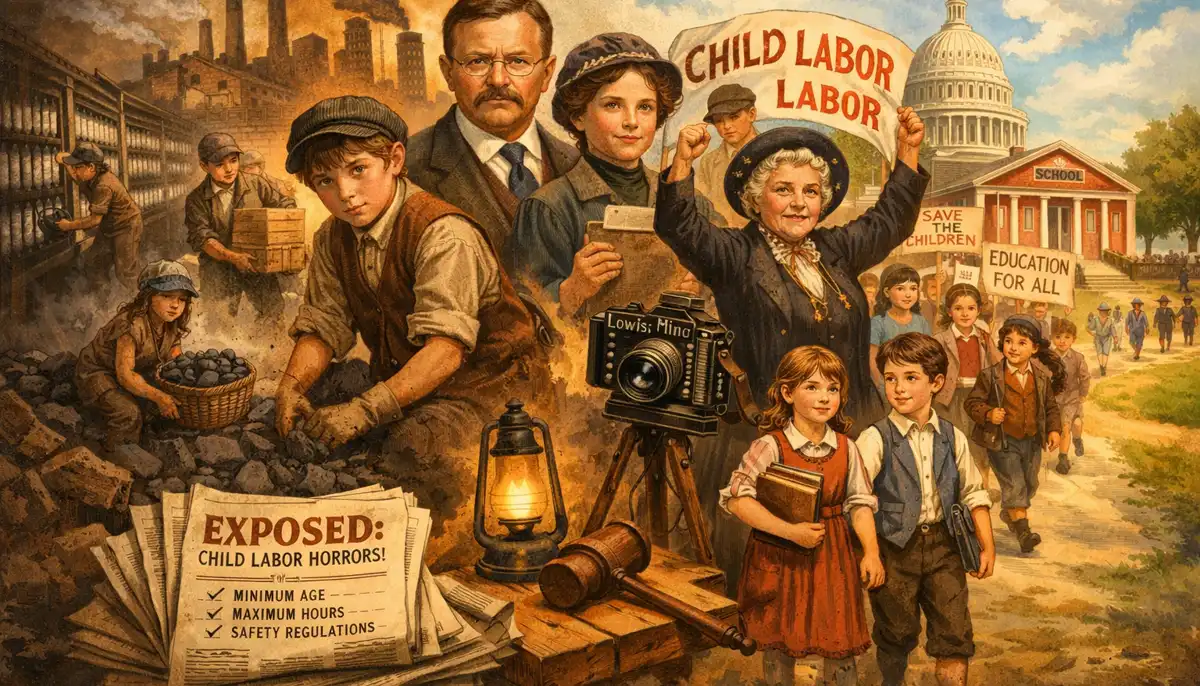
Muckrakers and the Trusts
- Theodore Roosevelt, "The Man with the Muck-Rake" (remarks at the laying of the cornerstone of the House office building) Washington, 14 April 1906The speech that gave the muckrakers their name, from the man in Pilgrim's Progress who raked filth and would not look up. Roosevelt both praised and warned them: "There are, in the body politic, economic and social, many and grave evils," and the men with the muck-rakes are indispensable "only if they know when to stop raking the muck."
- Ida M. Tarbell, The History of the Standard Oil Company, Volume I New York: McClure, Phillips & Co., 1904 (from McClure's Magazine, November 1902–October 1904)The preface tells how the editors of McClure's set out to show "the processes by which a particular industry passes from the control of the many to that of the few," and chose Standard Oil. Tarbell's documents — railroad rebate contracts, court testimony — are printed in the appendices.
- John D. Rockefeller, Random Reminiscences of Men and Events New York: Doubleday, Page & Co., 1909 (chapter III, "The Standard Oil Company")Rockefeller's own account of building the company, written while the government's suit against it was in the courts: "It is too late to argue about advantages of industrial combinations. They are a necessity." Read it beside Tarbell.
Workers and Children
- Lochner v. New York (with the dissents of Justice Harlan and Justice Holmes) 198 U.S. 45, decided 17 April 1905A Utica bakery owner was fined for letting a baker work more than sixty hours a week, against New York's Bakeshop Act. Five justices struck down the limit as interfering with the "liberty of contract." Harlan (with White and Day) dissented; Holmes, alone: "The 14th Amendment does not enact Mr. Herbert Spencer's Social Statics."
- Preliminary Report of the Factory Investigating Commission, 1912 Albany: The Argus Company, printers, 1912 (New York State)The state commission created after the fire, with State Senator Robert F. Wagner as chairman and Assemblyman Alfred E. Smith as vice-chairman, took testimony across the state. It begins with the fire, "in which 145 employees, mainly women and girls, lost their lives," and gives the bills it proposed on fire safety, sanitation and hours.
- Hammer v. Dagenhart (with Justice Holmes's dissent) 247 U.S. 251, decided 3 June 1918A North Carolina father sued to keep his two sons at work in a cotton mill. Five justices struck down the Keating–Owen Act as beyond Congress's power over commerce. Holmes, for four dissenters: "if there is any matter upon which civilized countries have agreed ... it is the evil of premature and excessive child labor." Read both.
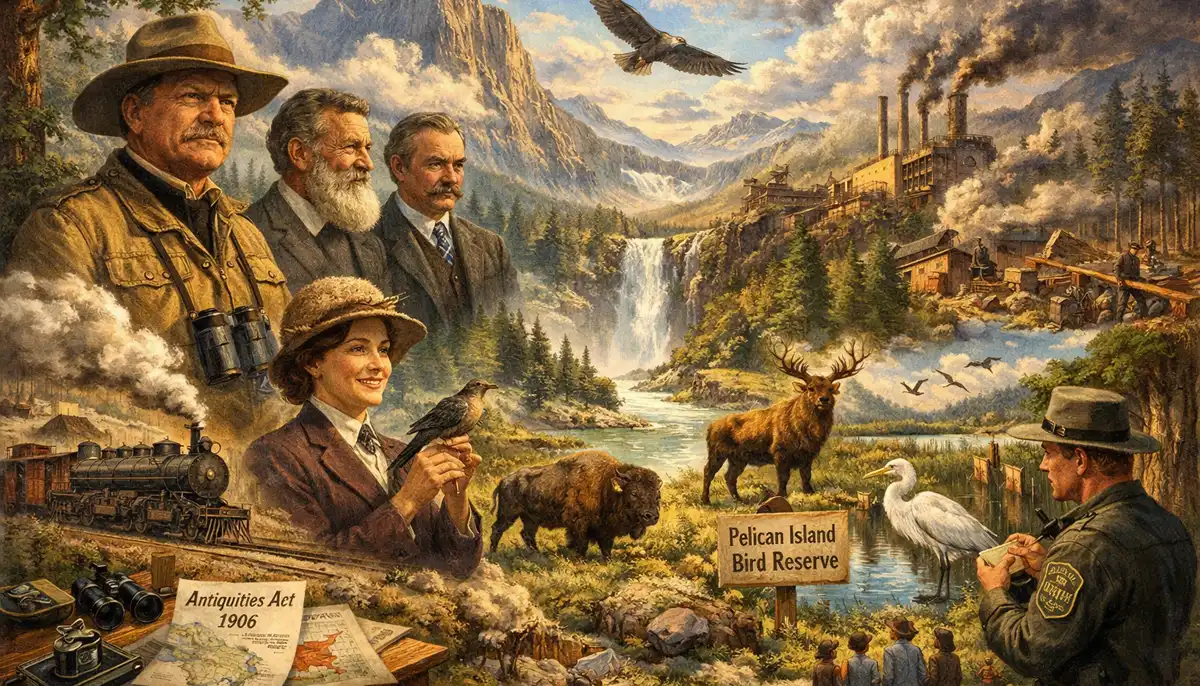
The Ballot and the Land
- Woodrow Wilson, Address to the Senate on the Nineteenth Amendment 30 September 1918Wilson went to the Senate in person: "I regard the concurrence of the Senate in the constitutional amendment proposing the extension of the suffrage to women as vitally essential to the successful prosecution of the great war of humanity in which we are engaged."
- John Muir, The Yosemite (chapter XVI, "Hetch Hetchy Valley") New York: The Century Co., 1912The founder of the Sierra Club against San Francisco's plan to dam the valley inside Yosemite National Park for a reservoir: "Dam Hetch Hetchy! As well dam for water-tanks the people's cathedrals and churches, for no holier temple has ever been consecrated by the heart of man."
- Gifford Pinchot, The Fight for Conservation New York: Doubleday, Page & Co., 1910The first chief of the Forest Service states what conservation meant to him: "The first great fact about conservation is that it stands for development." He means use of resources, wisely, by and for the people now living and those to come — a different aim from Muir's.
Pick two or more of these chapters to read. Finish two of the ones you choose to open Week 4.
K–5th Grade
6th–8th Grade
9th–12th Grade
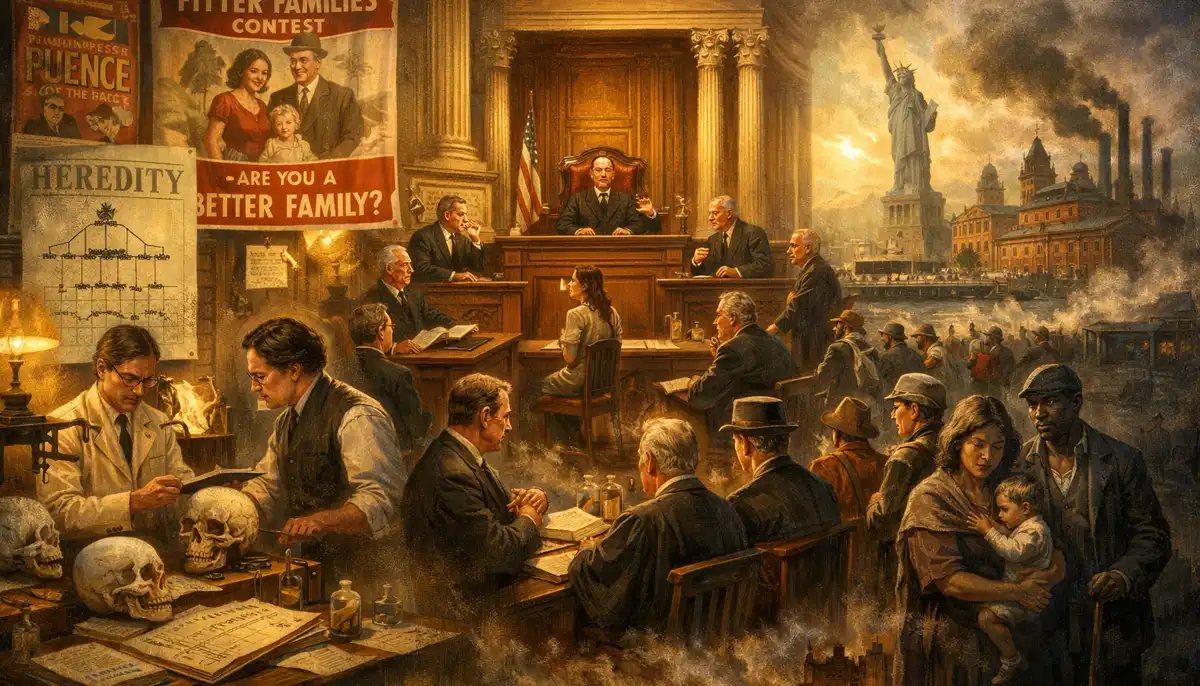
Eugenics in the Law
- Buck v. Bell (Justice Butler dissenting) 274 U.S. 200, decided 2 May 1927The Court upheld Virginia's sterilization act of 1924 as applied to Carrie Buck, an inmate of the State Colony for Epileptics and Feeble Minded. Justice Holmes wrote for eight justices: "Three generations of imbeciles are enough." The report closes: "Mr. Justice Butler dissents." He wrote no opinion.
- Harry H. Laughlin, Eugenical Sterilization in the United States Chicago: Psychopathic Laboratory of the Municipal Court of Chicago, December 1922The assistant director of the Eugenics Record Office (Carnegie Institution of Washington) collected every state sterilization law enacted before 1 January 1922, beginning with Indiana's of 1907, and the court decisions upon them, and wrote a "Model Eugenical Sterilization Law." Read one statute's own title — Washington's of 1921 is "An Act to prevent the procreation of feeble-minded, insane, epileptic, habitual criminals" and others in institutions.
- G. K. Chesterton, Eugenics and Other Evils London: Cassell and Co., 1922An English writer's case against eugenics, published in 1922; his notes on eugenics, he says, "were written before the war." Chapter I, "What Is Eugenics?", opens: "The wisest thing in the world is to cry out before you are hurt." Read it as an opponent's own words of the time.
Closing the Gates
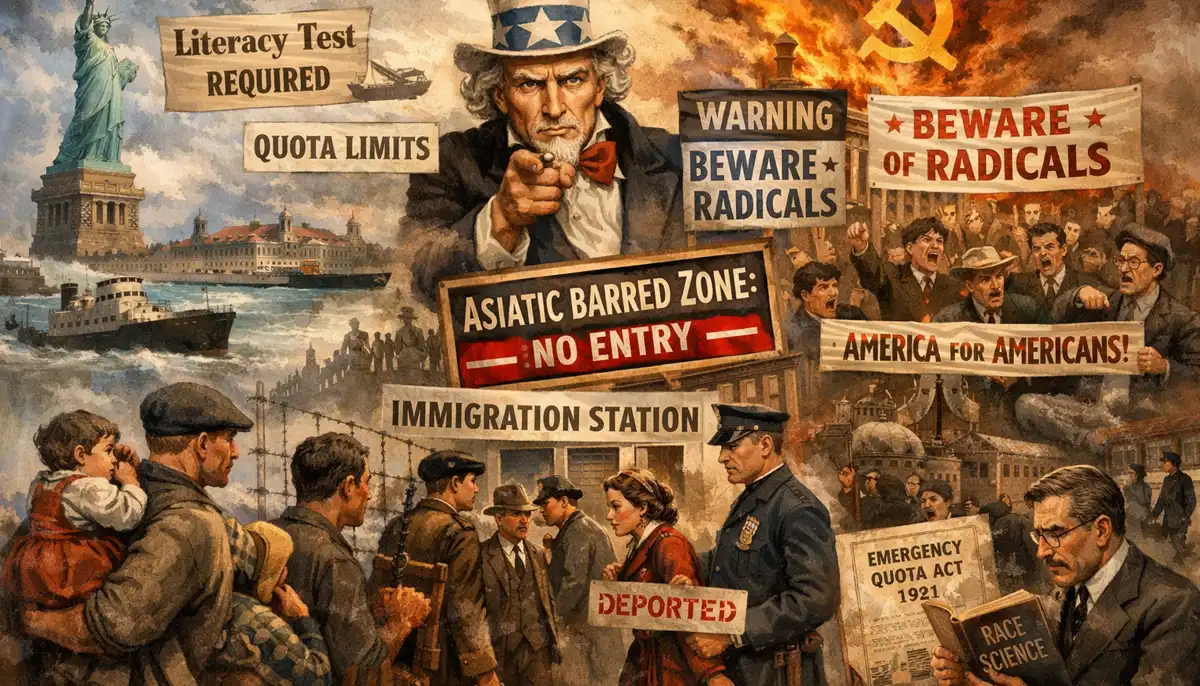
- Abstracts of Reports of the Immigration Commission, with Conclusions and Recommendations and Views of the Minority (the Dillingham Commission), Volume I Senate Document No. 747, 61st Congress, 3d session; Washington: Government Printing Office, 1911The joint commission chaired by Senator William P. Dillingham summed up its reports (Senate Document No. 747, presented by Mr. Dillingham, 5 December 1910). "A majority of the commission favor the reading and writing test as the most feasible single method of restricting undesirable immigration." The views of the minority, a member who did not agree, are printed directly after.
- Woodrow Wilson, Message to the House of Representatives returning without approval "An Act to Regulate the Immigration of Aliens to, and the Residence of Aliens in, the United States" 29 January 1917Wilson's second veto of a literacy test: it "is not a test of character, of quality, or of personal fitness, but would operate in most cases merely as a penalty for lack of opportunity in the country from which the alien seeking admission came." Congress passed the act over his veto on 5 February 1917.
- The Immigration Act of 1924 43 Stat. 153, approved 26 May 1924"This Act may be cited as the 'Immigration Act of 1924.'" Section 11: the annual quota of a nationality "shall be 2 per centum of the number of foreign-born individuals of such nationality resident in continental United States as determined by the United States census of 1890," with a later national-origins system. Read section 13(c) on aliens ineligible to citizenship.
War, Speech and Liquor
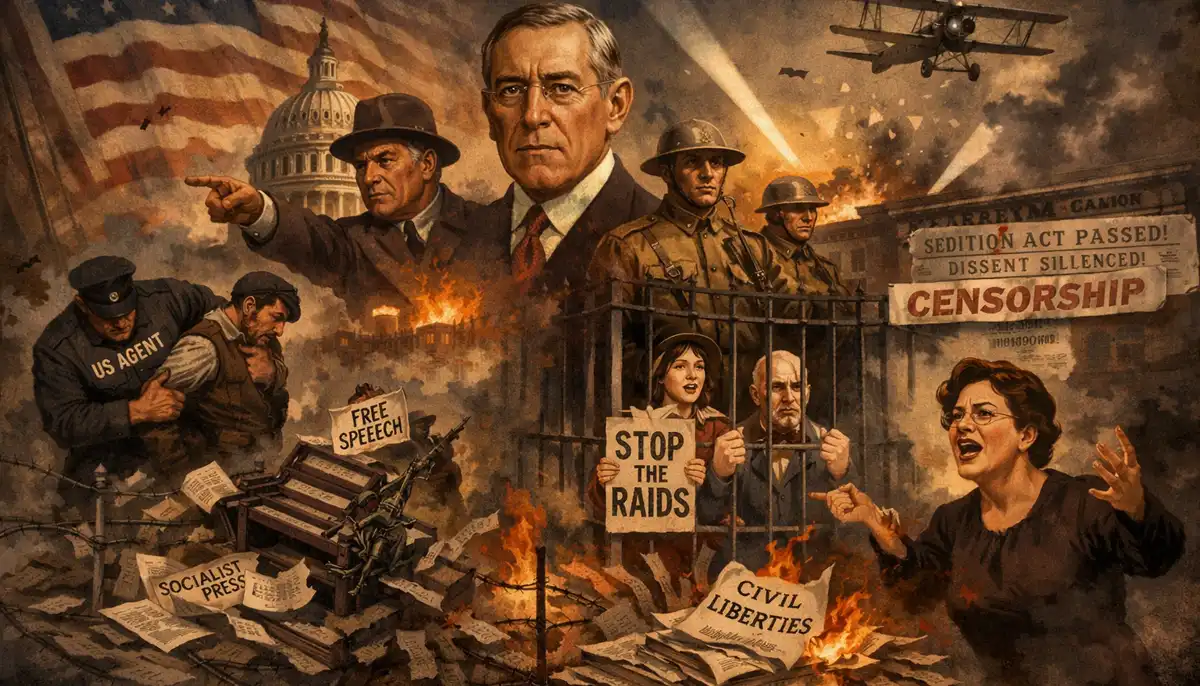
- Abrams v. United States (with Justice Holmes's dissent) 250 U.S. 616, decided 10 November 1919Seven justices upheld the convictions, under the 1918 amendment, of five defendants, all born in Russia, for leaflets thrown "from a window of a building" in New York against intervention in Russia. Holmes, with Brandeis, dissented: "the best test of truth is the power of the thought to get itself accepted in the competition of the market."
- National Popular Government League, To the American People: Report upon the Illegal Practices of the United States Department of Justice Washington, D.C., May 1920Twelve lawyers, among them Roscoe Pound, Felix Frankfurter and Zechariah Chafee, on the raids of November 1919 and January 1920: "Under the guise of a campaign for the suppression of radical activities, the office of the Attorney General ... has committed continual illegal acts." Affidavits and exhibits are printed with it.
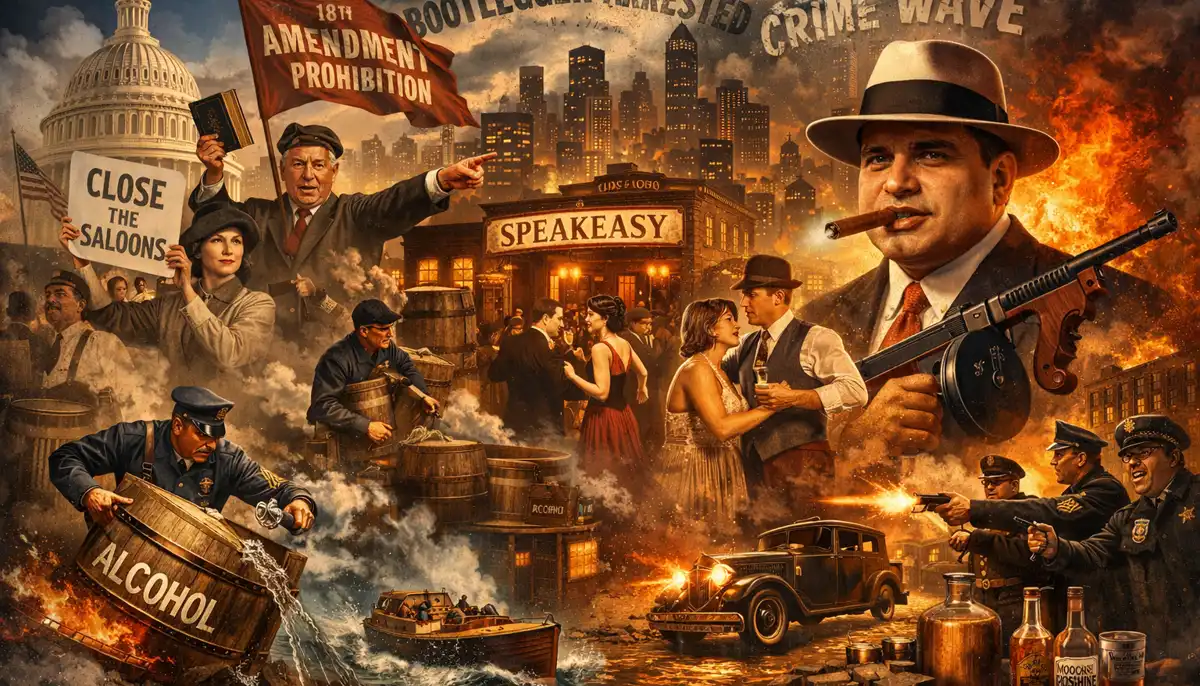
- The Volstead Act ("National Prohibition Act") 41 Stat. 305, enacted 28 October 1919 over the President's vetoThe enforcement act. Its definition made "intoxicating liquor" any beverage that contained "one-half of 1 per centum or more of alcohol by volume." Title I enforced the wartime prohibition already in force; Title II, the amendment.
Pick two or more of these chapters to read.
K–5th Grade
6th–8th Grade
9th–12th Grade
Race and the Reformers
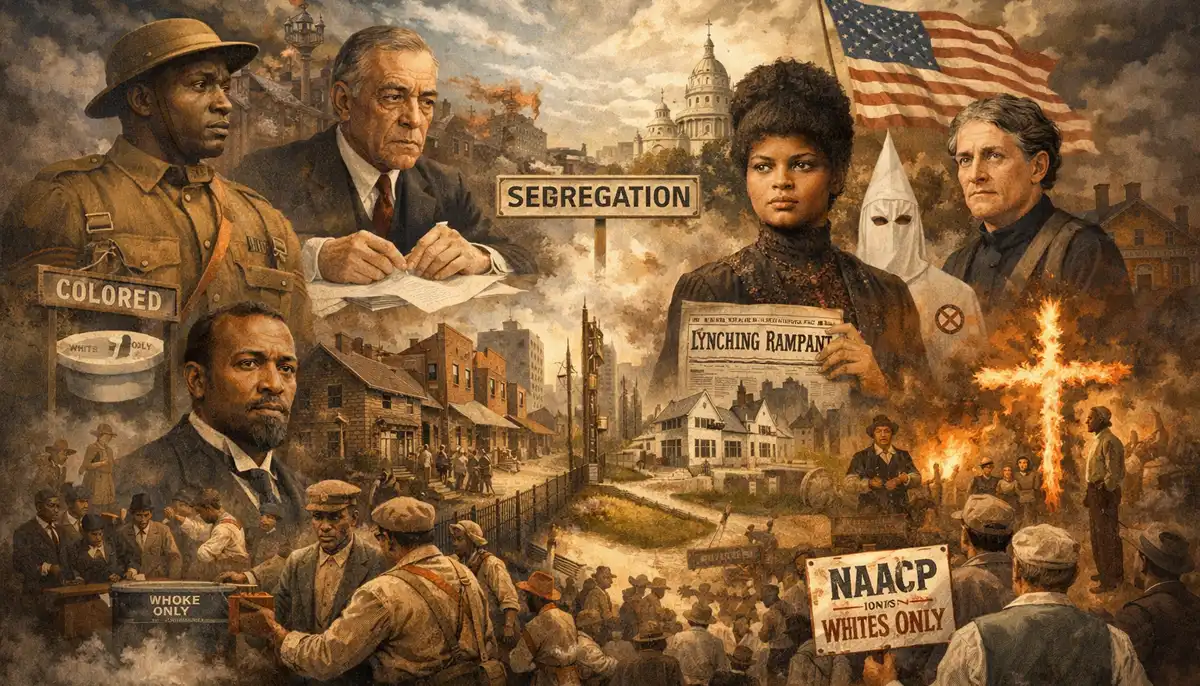
- The Crisis, Volume 9 (November 1914–April 1915): "Mr. Trotter and Mr. Wilson" New York: National Association for the Advancement of Colored People, January 1915William Monroe Trotter's account (pp. 119–120) of his delegation's meeting with President Wilson in November 1914 to protest the segregation of Black clerks in the federal departments, as printed in Du Bois's magazine, with Wilson's reply as Trotter reported it. Trotter reports the President saying: "Your manner offends me." One side's account, attributed.
- Theodore Roosevelt, Special Message to the Senate on the discharge of soldiers of the Twenty-fifth Infantry (Brownsville) 19 December 1906After a shooting in Brownsville, Texas, in August 1906, Roosevelt held that the soldiers had kept "a successful conspiracy of silence" and wrote: "I ordered the discharge of nearly all the members of companies B, C, and D of the Twenty-fifth Infantry by name." His defence of the order, in his own words.
- Buchanan v. Warley 245 U.S. 60, decided 5 November 1917Louisville's ordinance forbade a Black person to live on a block mostly white, and the reverse. A unanimous Court struck it down as a taking of property rights: may the use of property be denied "solely because of the color of the proposed occupant of the premises?" Moorfield Storey of Boston argued for Buchanan.
Experts and the People
- Frederick Winslow Taylor, The Principles of Scientific Management New York and London: Harper & Brothers, 1911The engineer's plan to study every motion of a job and set the one best method and pace, in his own words: "In the past the man has been first; in the future the system must be first." Read his account of the pig-iron handler he calls Schmidt.
- Zitkala-Ša, American Indian Stories Washington: Hayworth Publishing House, 1921A Yankton Dakota woman's memories of the missionary boarding school in the East she was taken to as a small girl: "And now my long hair was shingled like a coward's!" The reformers' school, told by the child it was meant to change.
- William Graham Sumner, What Social Classes Owe to Each Other New York: Harper & Brothers, 1883A Yale professor's answer, a generation earlier, to reformers who would plan for others; his chapters on "the Forgotten Man" ask who pays for each scheme. The other side of the reform argument, in its own words.
More Power to the Voters
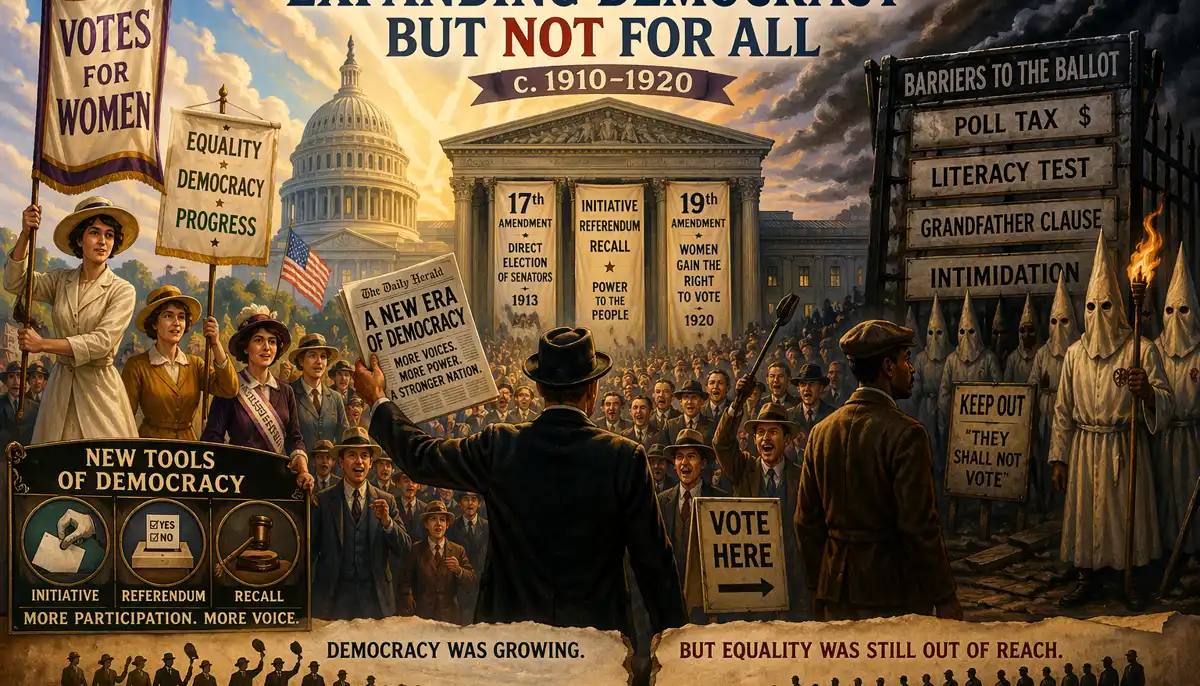
- The Seventeenth Amendment passed by Congress 13 May 1912; ratified 8 April 1913Senators to be "elected by the people thereof" instead of chosen by the state legislatures. Congress passed it in 1912, before Wilson took office.
- Guinn v. United States 238 U.S. 347, decided 21 June 1915Oklahoma's literacy test exempted anyone entitled to vote "on or prior to January 1, 1866," and his descendants — the grandfather clause. The Court found no reason for that date "unless the 15th Amendment was in view," and held the standard void. Moorfield Storey appeared "for National Association for the Advancement of Colored People."
- William Howard Taft, Message returning without approval the joint resolution admitting New Mexico and Arizona 15 August 1911Taft vetoed Arizona's admission because its constitution allowed the recall of judges, which he called "so destructive of independence in the judiciary, so likely to subject the rights of the individual to the possible tyranny of a popular majority." Arizona removed the clause, was admitted, and restored it.
What comes with the book
The Ultimate Guide
The textbook itself — the eighteen chapters these lessons are built from.
Living History
Heroes and Villains Series: Progressive Era — Told By Those Who Were There. The Heroes & Villains series, in the first person.
The Adventure Box
Cards, lesson plans, activities, coloring pages and the craft kit for this era.