History Curriculum/Book 14
Book fourteen of the curriculum
The History of the War of 1812
The fourteenth book in the curriculum and the seventh of the Early American set. Sixteen chapters across four weeks — from the Napoleonic Wars that turned the Atlantic into a battlefield a neutral country could not cross, through British forts and British muskets on the American frontier, the young congressmen who wanted a war, Jefferson's embargo and the unready nation Madison inherited, a surrendered Detroit and a burned York, six frigates and five hundred privateers, nine ships built out of green timber on Lake Erie, a capital in flames and a flag still flying over Baltimore, a Tennessee major general who marched his militia home at his own expense and then won at New Orleans, four months of argument in a Flemish town, and the tariffs, banks and factories the war left behind. TWO THINGS TO KNOW BEFORE YOU START. First, the first-person accounts in both printed editions are HISTORICAL FICTION — written to tell the story, built on the surviving record, and not the words of the people named. That matters here because the record for this war is enormous and free: Madison's messages to Congress, the Annals of Congress, the Ghent correspondence, ships' logs and captains' letters, Dolley Madison's own account of the day she left the President's House, and the speeches of Tecumseh as interpreters took them down. You can check almost everything in this book, which is exactly why the invented parts of it matter. Second, at the back of the Ultimate Guide, after the sixteen chapters, there are Cross-Curricular sections — Math, Science, English and a set of Testing pages — to use alongside this course. They are not a fifth week and there is nothing to hand in for them.
Read the book
Turn the pages of both editions right here. War of 1812 is a members’ book: subscribers and Adventure Box Course families read every page.
🔒 A members’ book — Living History 264 pages, Standard Book 346 pages. Subscribe, or buy an Adventure Box, to read it.
4 Weeks, 16 Chapters, Choose 8+ to Read
Pick the chapters you want to read each week. The living books and the sources are one click away.
Pick two or more of these chapters to read. Finish two of the ones you choose to open Week 2.
K–5th Grade
6th–8th Grade
9th–12th Grade
The Decrees, and the Neutral Caught Between Them
- The British Orders in Council, and Napoleon's Berlin and Milan Decrees Orders in Council of 7 January and 11 November 1807; Berlin Decree 21 November 1806; Milan Decree 17 December 1807READ THE DECREES THEMSELVES AND THE WAR STOPS BEING MYSTERIOUS. Each side told neutral shipping that obeying the other side made it a lawful prize. A ship that called at a British port to pay duties was liable to French seizure; a ship that did not was liable to British seizure. There was no legal course open to an American captain, which is the point summaries lose. AND CHECK THE DATE OF THE REVOCATION: the Orders were revoked on 23 JUNE 1812, five days AFTER Congress declared war. The Guide says two days before.
- The Embargo Act, the Non-Intercourse Act and Macon's Bill No. 2 22 December 1807; 1 March 1809; 1 May 1810Three statutes in thirty months, each replacing the last because the last had failed. They are short. Read them in order and you are watching a government try four different theories of economic pressure and run out of them, which is a better lesson in policy than any summary of it. American exports fell from about $108 million in 1807 to about $22 million in 1808.
- The protests of the impressed, and the muster books that prove them Royal Navy muster books and the State Department's protection certificates, 1796–1812Impressment is the grievance the Guide spends most words on and documents least. It is documentable: American seamen carried protection certificates issued by customs collectors, the State Department kept lists of men claimed, and the Royal Navy's own muster books name every man aboard every ship. Britain's legal position was INDEFEASIBLE ALLEGIANCE — a subject could not stop being one — and the American position was that naturalisation meant what it said. Two coherent laws in direct collision.
The Frontier, and the Nations Defending It
- Tecumseh's speech to William Henry Harrison at Vincennes 12 August 1810, as recorded by those presentThe core of his argument, and it is a legal one rather than a sentimental one: land is held in common by all the nations, so no single nation can sell what belongs to all. TAKE CARE HOW YOU QUOTE IT. What survives is what interpreters and clerks wrote down afterwards, in several versions that do not match word for word, so the ARGUMENT is solid and the WORDING is not. The Guide gives him a sentence about a bundle of sticks that is in none of the versions.
- The Treaty of Greenville, and the treaties that followed it Greenville, 3 August 1795; Fort Wayne, 30 September 1809The paper trail of the frontier, and the documents Tecumseh was objecting to. Greenville ended the Northwest Indian War and drew a line; Fort Wayne sold three million acres of land that the Miami, Potawatomi and Delaware signatories arguably had no authority to sell, and it is what made Prophetstown into a movement. Both are short and both name their signatories.
- Harrison's own dispatches from Tippecanoe 7 November 1811He wrote the first account of the battle himself, and it is worth reading against the fact that he spent the next thirty years running for office on it. Tecumseh was five hundred miles away recruiting in the south; Tenskwatawa attacked against his brother's instructions; Prophetstown was burned. The confederacy survived Tippecanoe and did not survive the Thames.
The Congress That Voted For It
- Madison's war message to Congress 1 June 1812About two thousand words, and it lists the grievances in the order the administration wanted them read: impressment first, then the violation of neutral waters, then the blockades, then the Orders in Council, and Native hostilities LAST and briefly. THAT ORDER IS AN ARGUMENT. A student who has been told the war was about the frontier should read the message and notice that the President barely mentions it.
- The roll calls on the declaration of war House, 4 June 1812, 79 to 49; Senate, 17 June 1812, 19 to 13; signed 18 JuneTHE CLOSEST VOTE FOR ANY AMERICAN WAR. Read the names by state and the map of the next three years appears: yes from the south and west, no from Federalist New England. It is in the Annals of Congress and it takes five minutes.
- The Annals of Congress for the Twelfth Congress convened 4 November 1811Clay elected Speaker on his first day in the House; Calhoun reporting for the Committee on Foreign Relations; Randolph of Roanoke speaking against the war at enormous length and being right about most of it. The Annals are a compilation from newspaper reports rather than a transcript, which is worth knowing before quoting a speech from them.
Pick two or more of these chapters to read. Finish two of the ones you choose to open Week 3.
K–5th Grade
6th–8th Grade
9th–12th Grade
The Land War, and the Court That Judged It
- William Hull's proclamation to the people of Canada Sandwich, Upper Canada, 12 July 1812The assumption the whole campaign rested on, in his own words, and one of the few quotations in this book that can be checked in one line: the inhabitants "will be emancipated from Tyranny and oppression and restored to the dignified station of freemen". They were not interested. Read it beside Brock's answering proclamation of 22 July and you have the war in two documents.
- The court-martial of Brigadier General William Hull Albany, January–March 1814; sentenced to death, remitted by MadisonTHE FULLEST SINGLE ACCOUNT OF THE DETROIT CAMPAIGN IS THE PROCEEDINGS OF THE MAN BLAMED FOR IT, which is a useful thing for a student to sit with. He was convicted of cowardice and neglect of duty, sentenced to be shot, and pardoned on account of his Revolutionary service. He had no supply line, no control of Lake Erie and a British commander who let him think he was outnumbered.
- The despatches of Isaac Brock June to October 1812A general defending a colony with about 1,500 regulars, writing to superiors who had told him to stand on the defensive and doing the opposite. His letters cover Michilimackinac, Detroit and the fortnight before Queenston Heights, where he was killed on 13 October leading a charge he did not need to lead.
The Sea War, Which Is The Best-Documented Part Of It
- The Naval War of 1812: A Documentary History the U.S. Navy's own edition of the logs, letters and courts of inquiryTHE SOURCE THAT SETTLES ALMOST EVERY NAVAL QUESTION IN THIS BOOK, and it is free. Isaac Hull's report on the Guerrière of 30 August 1812; Perry's dispatch to Harrison of 10 September 1813 with its inventory of prizes; Barclay's own court-martial, which he survived; Macdonough at Plattsburgh. Anybody who wants to know whether a naval sentence in this book is true starts here.
- Joshua Humphreys's design correspondence for the six frigates 1794–1797Why the Constitution won. Humphreys designed ships longer and more heavily framed than any foreign frigate, carrying 24-pounders where British frigates carried 18s, on the argument that a small navy must never be in a fair fight. The letters set out the reasoning before any of the ships existed, which is what makes them worth reading rather than just admiring the hull.
- The prize court records of the privateers district court admiralty proceedings, 1812–1815Somewhere between 1,300 and 1,500 British vessels were taken and each one generated paper: a libel, a valuation, a condemnation and a division of shares. THIS IS WHERE THE PRIVATEER NUMBERS COME FROM, and it is why the two different figures in the Guide are both defensible depending on what is counted. Thomas Boyle's mock blockade proclamation of 27 August 1814 is a real document; read the real one.
1814, And The Flag
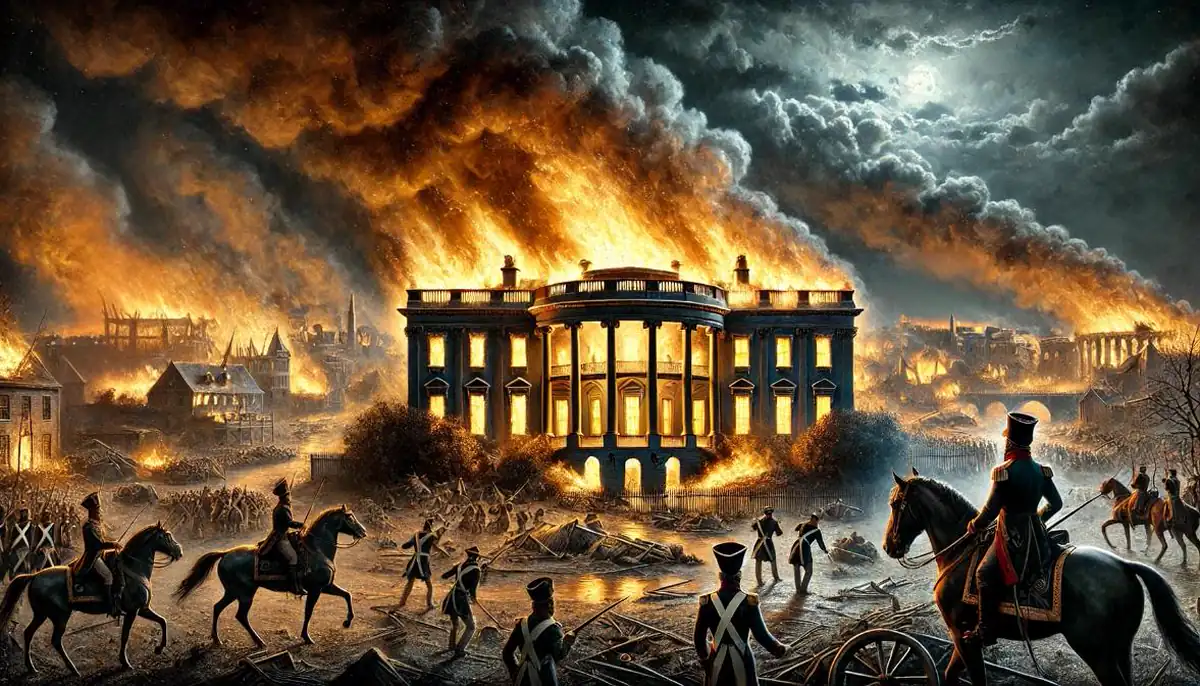
- Dolley Madison's letter to her sister Lucy Washington, 23–24 August 1814Written in the house, in two sittings, as the guns at Bladensburg became audible. It is the best-known American document of the war and it is two pages long. Read it beside the reminiscences of PAUL JENNINGS, who was enslaved in the President's House, was there that day, and published his account in 1865 — the two together are how anybody knows what happened in those rooms.
- Francis Scott Key's "Defence of Fort M'Henry" written 14 September 1814; printed as a broadside within days and in the Baltimore Patriot on 20 September 1814FOUR STANZAS, NOT ONE. The other three are the answer to the question the first one asks, and the fourth contains the line that became the national motto. It was set to "To Anacreon in Heaven" from the start, it was called "Defence of Fort M'Henry" for a year, and it did not become the national anthem until Congress made it one on 3 March 1931.
- Armistead's report on the defence of Fort McHenry, and Mary Pickersgill's receipt Armistead to the Secretary of War, 24 September 1814; Pickersgill's bill, 1813Two pieces of paper that between them prove the story. Armistead counted the bombardment at about twenty-five hours; the flag was made in Baltimore by Mary Pickersgill, assisted by her daughter, her nieces and an indentured African American girl named Grace Wisher, to measurements of thirty by forty-two feet, and SHE WAS PAID $405.90 FOR IT AND THE RECEIPT SURVIVES. The flag itself is in the Smithsonian.
Pick two or more of these chapters to read. Finish two of the ones you choose to open Week 4.
K–5th Grade
6th–8th Grade
9th–12th Grade
Jackson, And The Creek War
- The Treaty of Fort Jackson 9 August 1814Three pages, and the most consequential document of the southern war. The Creek Nation ceded some twenty-three million acres — about half its territory, in what became Alabama and Georgia — AND THE CESSION FELL ON THE FRIENDLY CREEKS TOO. Read the signature list against the list of nations that fought beside Jackson at Horseshoe Bend and the grievance of the next twenty years is on the page.
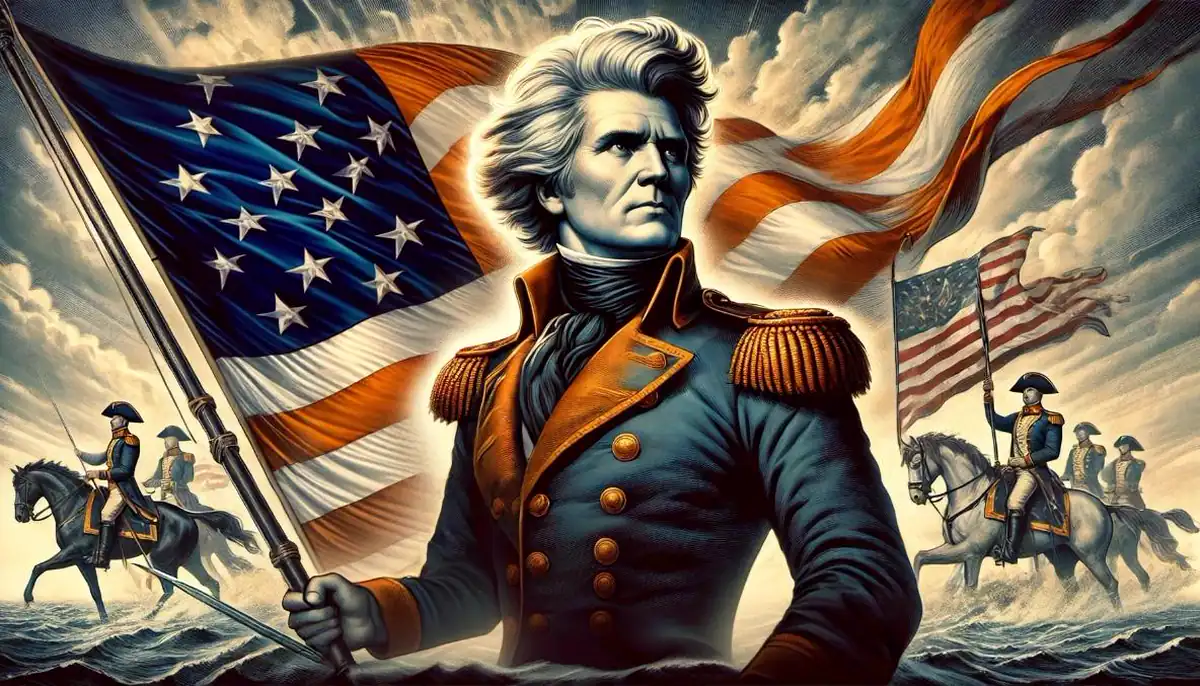
- Jackson's correspondence from the Natchez expedition January to April 1813Ordered to Natchez, told on arrival that the campaign was cancelled and to dismiss his 2,000 volunteers five hundred miles from home without pay, he marched them back at his own expense and billed the government afterwards. His letters about it are where "Old Hickory" comes from. It was also flat insubordination and nobody punished him for it, which is a pattern worth noticing early.
- Jackson's report on Horseshoe Bend, and Monroe's orders about Pensacola 27 March 1814; autumn 1814Read these two together. The first is a victory report — the Red Stick fortification at Tohopeka carried, some eight hundred warriors dead, forty-nine of his own. The second is the administration telling him to keep out of Spanish Florida, WHICH HE THEN ENTERED ANYWAY on 7 November 1814. The Guide says he had approval. The orders say he did not.
Ghent, In Eleven Articles
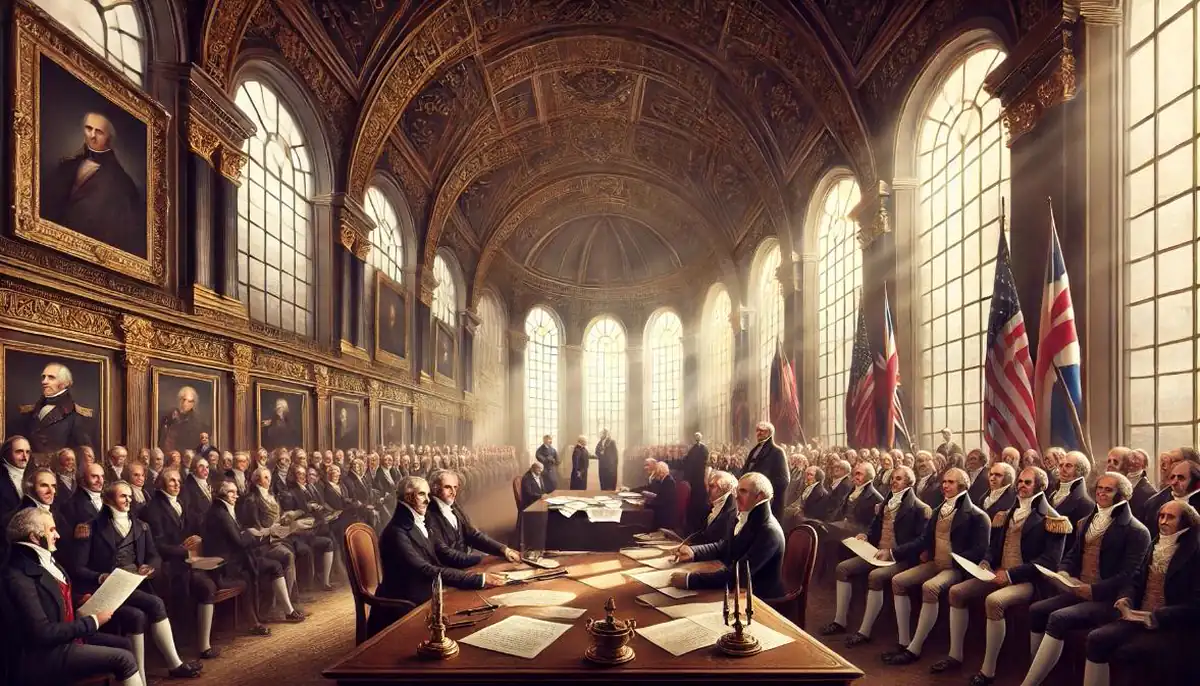
- The Treaty of Ghent signed 24 December 1814; ratifications exchanged at Washington 17 February 1815ELEVEN ARTICLES AND SHORT ENOUGH TO READ IN TWENTY MINUTES, and reading it is the fastest way to understand the war. It says nothing about impressment, nothing about neutral rights, nothing about the blockades — the four things the war was declared over are all absent. It restores the boundaries of 1811, sets up joint commissions for the disputed ones, and ARTICLE IX binds both sides to make peace with the Native nations and restore their 1811 possessions. AND READ ARTICLE I TO THE END: it requires the return of "any Slaves or other private property", Britain did not return the people, and the dispute was arbitrated by the Tsar and settled with a payment in 1826. Neither printed edition mentions it.
- The instructions to the American commissioners, and their letters home April 1814 to January 1815Both sides' opening positions, both of which were abandoned. The Americans were told to insist on an end to impressment; the British opened by demanding a permanent Native buffer state in the Northwest, exclusive military control of the Lakes and a slice of Maine. Then Plattsburgh was lost, Baltimore held, and the news reached London — and by the end of October the British were proposing to settle on the basis of things as they stood.
- The diary of John Quincy Adams kept daily, including every day at GhentHe kept it for sixty-nine years and he kept it at Ghent, which makes the negotiation one of the best-documented in American history from the inside. It is also very funny about his colleagues: he rose before dawn to read his Bible and Clay came in from cards as he was getting up. FREE AND SEARCHABLE.
New Orleans, And Afterwards
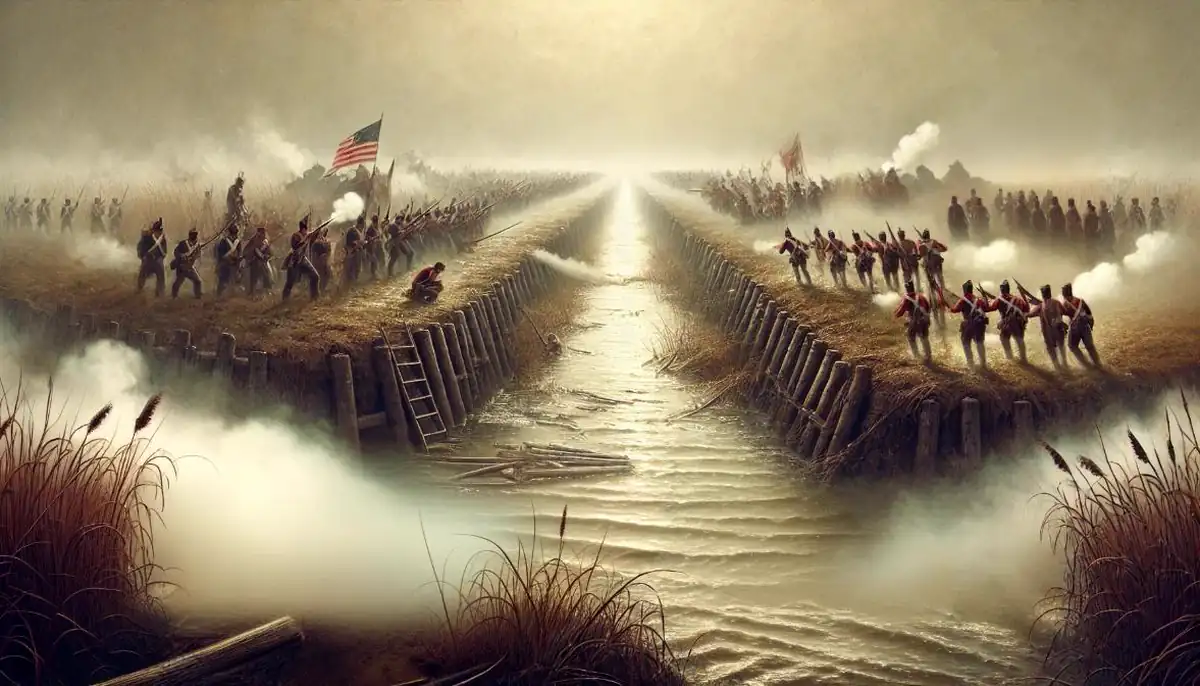
- Jackson's report of the battle of 8 January 1815, and the British returns January 1815The two casualty counts, side by side, and the disparity is real: about 2,000 British killed, wounded and missing against 71 Americans in all. READ THEM FOR WHAT THE BRITISH RETURNS EXPLAIN — a frontal assault across open ground against an entrenched line with artillery, ladders and fascines left behind, and three generals down. It was a failure of plan rather than a miracle.
- Madison's proclamation pardoning the Baratarians 6 February 1815ONE PAGE, AND IT SETTLES THE LAFITTE STORY. The pardon came a month AFTER the battle and it came from the President, conditional on proof of service. The Guide has Jackson agreeing it in his office in December in exchange for help. The men — Dominique You and Renato Beluche among them — really did serve the guns, and really did have to wait.
- The report of the Hartford Convention Hartford, 15 December 1814 – 5 January 1815; report publishedIT PROPOSED SEVEN CONSTITUTIONAL AMENDMENTS AND IT DID NOT PROPOSE SECESSION. Among them: repeal the three-fifths clause, require a two-thirds vote for war and for admitting new states, and limit presidents to one term. It was published, it can be read, and it is nothing like what it is remembered as. The Federalists' problem was not what they wrote but WHEN they published it — within weeks of Ghent and New Orleans.
Pick two or more of these chapters to read.
K–5th Grade
6th–8th Grade
9th–12th Grade
Algiers, Twice
- The treaty with Algiers of 1815, and the treaty of 1816 that replaced it signed in the bay of Algiers 30 June 1815; second treaty December 1816TWO TREATIES, AND THE GUIDE ONLY HAS THE FIRST. Decatur's terms of June 1815 ended tribute, freed the American captives without ransom and were dictated from the deck of the Guerriere. THEN THE DEY REPUDIATED THEM. A second squadron under William Bainbridge followed, a British and Dutch fleet under Edward Pellew bombarded Algiers on 27 August 1816, and a new treaty was made in December 1816 by Chauncey and Shaler. EDWARD PELLEW IS A NARRATOR OF THIS CHAPTER IN THE LIVING EDITION and neither edition mentions the bombardment.
- Decatur's dispatches from the Mediterranean May to August 1815The whole campaign in a few letters: sailed from New York 20 May, Gibraltar by mid-June, the Algerine flagship Mashouda taken off Cape de Gata on 17 June with Rais Hamidou killed aboard her, the brig Estedio taken two days later, and the treaty on the 30th. Six weeks. It is the clearest demonstration in the course of what a squadron is for.
- The treaty of 1805 that ended the First Barbary War Tripoli, 4 June 1805The one the second war was fought because of. It stopped annual tribute to Tripoli but included a ransom of $60,000 for the crew of the Philadelphia, which is the kind of detail that gets left out of "we refused to pay". Read it against the 1815 treaty and the change in ten years is measurable.
Monroe's Two Terms
- The Adams–Onís Treaty signed 22 February 1819; ratified 1821Florida for the United States, a boundary drawn from the Sabine to the 42nd parallel and along it to the Pacific, Spain's claim north of it given up and the American claim to Texas given up with it. John Quincy Adams thought it the best thing he ever did, and he was probably right. It is also why it is called the TRANSCONTINENTAL treaty: it put the United States on the Pacific on paper thirty years before it got there.
- The Missouri Compromise the enabling act of 6 March 1820Missouri in as a slave state, Maine in as a free one, and slavery prohibited in the rest of the Louisiana Purchase north of 36°30′. Read Jefferson's letter to John Holmes of 22 April 1820 beside it, in which he calls the line a "fire bell in the night" — that one is real, dated and free to read, and it is the best single sentence anybody wrote about what had just happened.
- Monroe's seventh annual message to Congress 2 December 1823The Monroe Doctrine is four or five paragraphs inside a long annual message about post office receipts and revenue cutters, and reading it in place is the lesson. Nobody called it a doctrine for thirty years, the United States had no means of enforcing it, and the thing that actually kept European fleets out of the Americas was the Royal Navy, which wanted the trade. Adams drafted the substance and insisted it be unilateral.
The Economy The War Made
- The Tariff of 1816, and the act chartering the Second Bank of the United States tariff of 27 April 1816; bank act signed 10 April 1816TWO STATUTES, SIX WEEKS APART, FROM THE MAN WHO HAD SPENT TWENTY YEARS ARGUING AGAINST BOTH. Madison had helped kill the First Bank on constitutional grounds and signed the Second; he had been a free-trade man and signed the first tariff written to protect manufactures rather than raise revenue. The roll calls are the interesting part: Calhoun of South Carolina voted FOR the tariff and Webster of New Hampshire voted AGAINST it, which is the exact reverse of where both men ended up.
- Stephen Girard's accounts, and the war loan of 1813Philadelphia, 1813The Treasury tried to borrow $16 million in 1813 and could not fill the loan. Girard, David Parish and John Jacob Astor took up most of the remainder between them, at a discount that made them a great deal of money. IT IS THE SINGLE BEST ARGUMENT THE PERIOD PRODUCED FOR A NATIONAL BANK, and it is an argument made of ledgers rather than opinions.
- The Boston Manufacturing Company's records Waltham, Massachusetts, from 1813Francis Cabot Lowell went to Britain, looked hard at power looms he was not allowed to draw, came home and built one — and then did the thing that mattered more, which was to put spinning and weaving under one roof and one company. THE WALTHAM MILL IS WHERE THE AMERICAN FACTORY BEGINS, it began during the war and because of it, and the company's own books survive. Lowell died in 1817 at forty-two.
What comes with the book
The Ultimate Guide
The textbook itself — the sixteen chapters these lessons are built from.
Living History
Heroes and Villains: The War of 1812 — Told By Those Who Were There. The Heroes & Villains series, in the first person.
The Adventure Box
Cards, lesson plans, activities, coloring pages and the craft kit for this era.