History Curriculum/The books
History Books Series
The Books Behind the Curriculum
Each book becomes a full lesson program — a chapter at a time, with a subject matter specialist, a video, music, an activity and an exam.
Three sets, ten books each
The online course comes in three sets (eras). Buying a set opens its books on your account.
10 of 10 books online
Early American History
From the first peoples of the Americas to the Civil War — ten books, read in order.
5 of 10 books online
Late American History
From the factories of the Industrial Revolution to the present day — ten books, read in order.
9 of 10 books online
Ancient Civilizations
The great civilizations of the ancient world, from the Americas to China — ten books.
Book one — available now
The History of Ancient America
Ultimate Guide to Learning
The first book in the curriculum. Sixteen chapters across four weeks, from the peoples of the Arctic to the Caribbean islands Columbus sailed into.
- 16 chapters across 4 weeks, grouped by region
- Living books graded K–5, 6–8 and 9–12 for every week
- Primary sources — codices, oral histories, archaeology and archives
- An exam on every chapter, marked instantly
Book two — available now
The History of the Age of Exploration
Ultimate Guide to Learning
The second book in the curriculum. Twenty chapters across five weeks, from Norse ships on the Newfoundland coast to Champlain founding Quebec, told from the logs, letters and chronicles of the people who sailed.
- 20 chapters across 5 weeks, grouped by the nation that sent them
- Living books graded K–5, 6–8 and 9–12 for every week
- Primary sources — sagas, ships' logs, royal charters, and the accounts of the Native nations they met
- An exam on every chapter, marked instantly
Book three — available now
The History of America's Colonial Life
Ultimate Guide to Learning
The third book in the curriculum. Nineteen chapters across four weeks — the English, Spanish, Portuguese, Dutch, Swedish, Russian and French colonies, and the people who were already living where they were built.
- 19 chapters across 4 weeks, grouped by the empire that planted them
- Living books graded K–5, 6–8 and 9–12 for every week
- Primary sources — charters, compacts, sermons, mission records, and the accounts of the Native nations
- An exam on every chapter, marked instantly
Book four — available now
The History of the French and Indian War
Ultimate Guide to Learning
The fourth book in the curriculum. Twenty chapters across four weeks — a quarrel over a river fork in the Ohio Country that became the first war fought on every ocean, told by the soldiers, governors, sachems, kings and shopkeepers who lived through it.
- 20 chapters across 4 weeks, grouped by the year the fighting reached
- Living books graded K–5, 6–8 and 9–12 for every week
- Primary sources — dispatches, capitulations, treaties, councils, journals and the letters of the men and women who were there
- An exam on every chapter, marked instantly
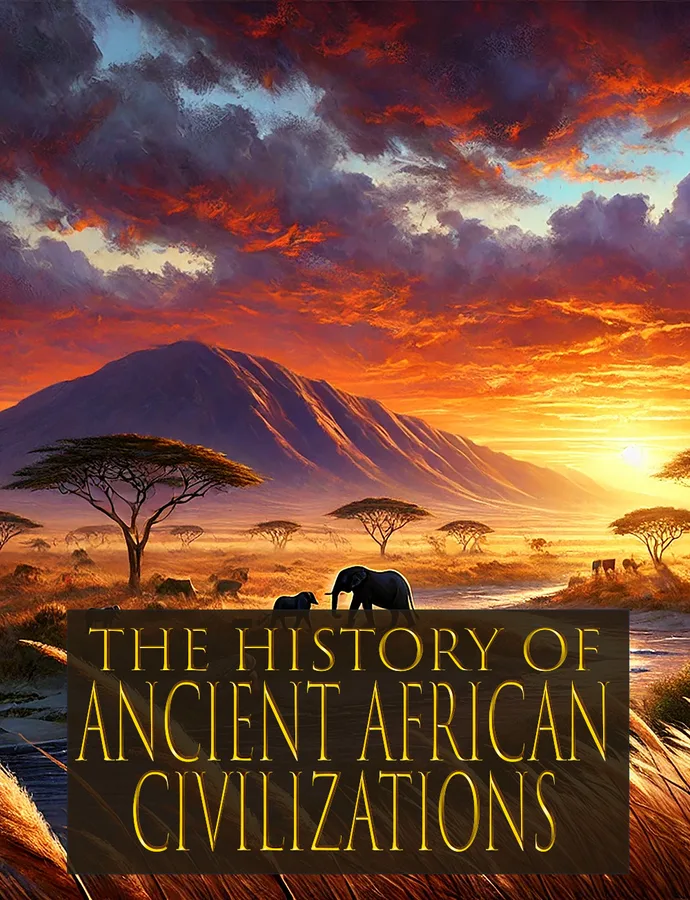
Book five — available now
The History of Ancient Africa
Ultimate Guide to Learning
The fifth book in the curriculum. Twenty chapters across four weeks — from the first sharpened flint and the first tended fire, through a Sahara green with lakes and cattle, to the gold courts of Ghana, Mali and Songhai, the coral cities of the Swahili coast, the mortarless stone walls of Great Zimbabwe, and the Christian kingdoms of the Nile.
- 20 chapters across 4 weeks, grouped by the age the evidence belongs to
- Living books graded K–5, 6–8 and 9–12 for every week
- Primary sources — excavation reports, rock art, sediment cores, coins and inscriptions, the notebooks of travellers who wrote down what they saw, and the oral tradition the griots carried
- An exam on every chapter, marked instantly
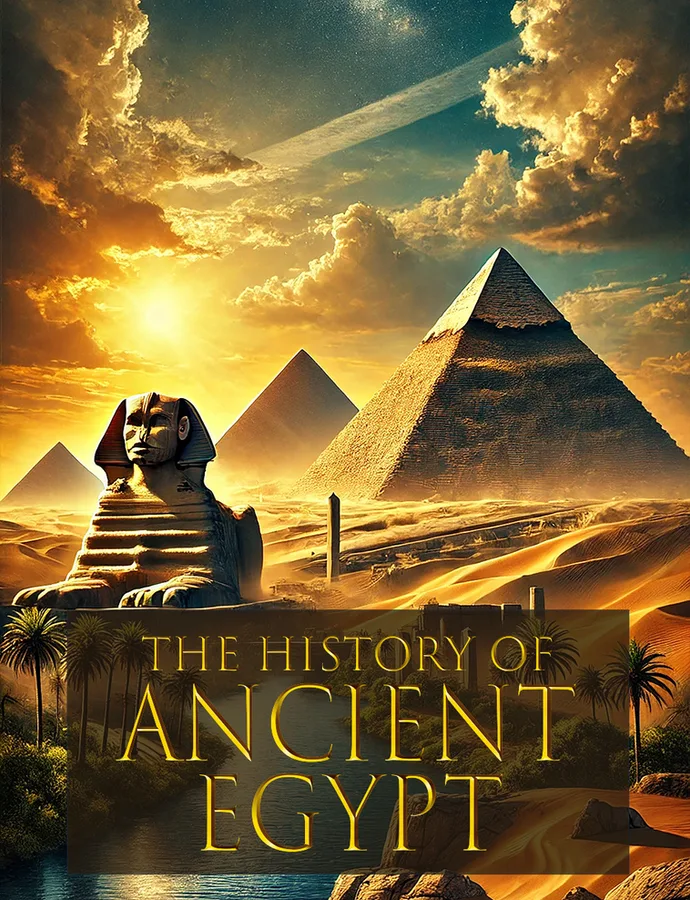
Book 6 — available now
The History of Ancient Egypt
Ultimate Guide to Learning
The sixth book in the curriculum. Twenty chapters across four weeks — from the farming villages of the Nile before there were kings, through the pyramids of the Old Kingdom, the chariots of the New, the Kushite pharaohs who ruled from Napata and the Greek kings who ruled from Alexandria, to the Christian Egypt that fell to the armies of the Caliphate.
- 20 chapters across 4 weeks, grouped by the kingdom or period the evidence belongs to
- Living books graded K–5, 6–8 and 9–12 for every week
- Primary sources — carved inscriptions and temple annals, king lists on stone and papyrus, letters in clay, tomb paintings and grave goods, the accounts of Greek and Roman visitors, and the excavation reports of the sites themselves
- An exam on every chapter, marked instantly
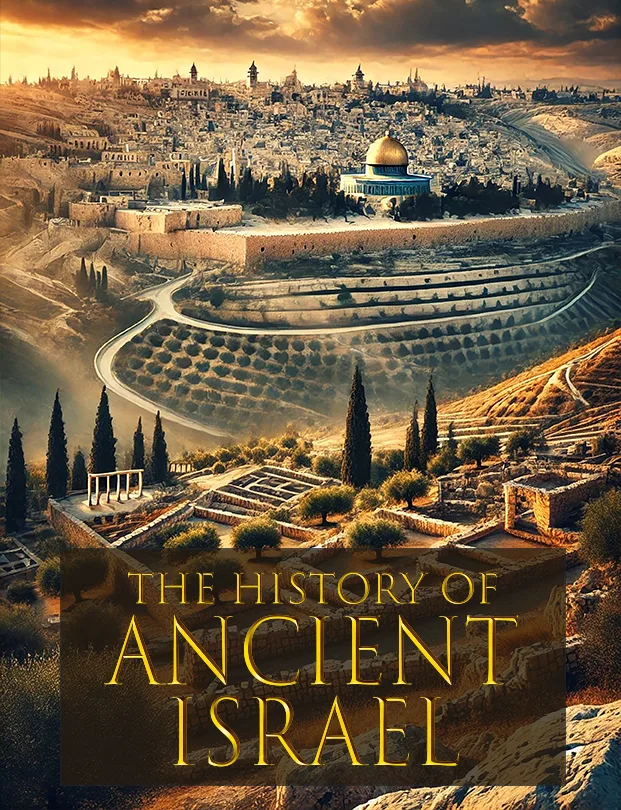
Book 7 — available now
The History of Ancient Israel
Ultimate Guide to Learning
The seventh book in the curriculum. Twenty chapters across five weeks — from the question of where the records of a people called the Hebrews come from, through the patriarchs, Egypt and the Exodus, the tribes in Canaan and the kings in Jerusalem, to the Assyrian and Babylonian conquests, the exile and return, the Maccabees, and the Roman province of Judea.
- 20 chapters across 5 weeks, grouped by the period the two books themselves group it under
- Living books graded K–5, 6–8 and 9–12 for every week
- Primary sources — the books of the Hebrew Bible, named chapter and verse; the royal inscriptions of Egypt, Assyria, Babylon, Moab and Persia; clay tablets and ostraca from Al-Yahudu, Lachish and Elephantine; the Dead Sea Scrolls; the Greek and Roman historians; and the excavation reports of Jericho, Hazor, Megiddo, Lachish, Samaria, Khirbet Qeiyafa and the City of David
- An exam on every chapter, marked instantly
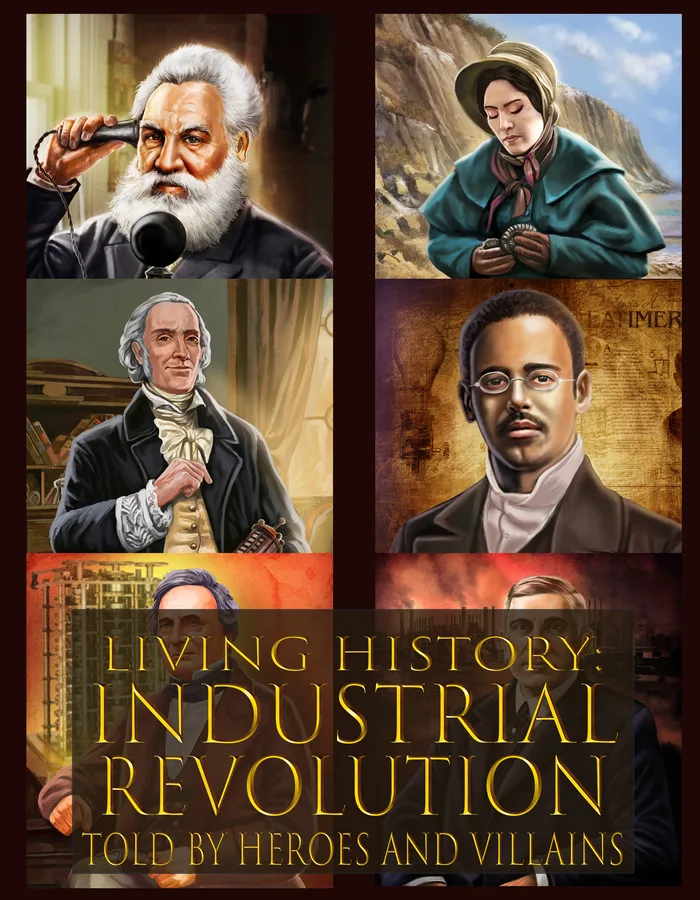
Book 8 — available now
The History of the Industrial Revolution
Ultimate Guide to Learning
The eighth book in the curriculum and the first of the Late American History set. Seventeen chapters across four weeks — from a world of cottage spinning and horse-drawn carts, through the first factories in Britain and then in New England, the locomotive, the telegraph, the cotton gin and the mills it fed, oil, canned food, germ theory and electric light, to the union hall, the tenement, the schoolroom and the tariff bill, stopping in 1901.
- 17 chapters across 4 weeks, grouped by the four weeks the Guide's own family adventure path groups it under
- Living books graded K–5, 6–8 and 9–12 for every week
- Primary sources — the royal commission and select committee reports on factory and mine labour; the factory inspectors' returns; census returns and parish registers; patent specifications; company ledgers, wage books and shipping returns; the sanitary reports and the medical investigations that followed them; the workers' own periodicals, petitions and strike testimony; the trial records and coroners' inquests of Haymarket, Homestead and Pullman; the statutes, vetoes and presidential messages of 1885 to 1901; and the machines, mills and locomotives that are still standing
- An exam on every chapter, marked instantly
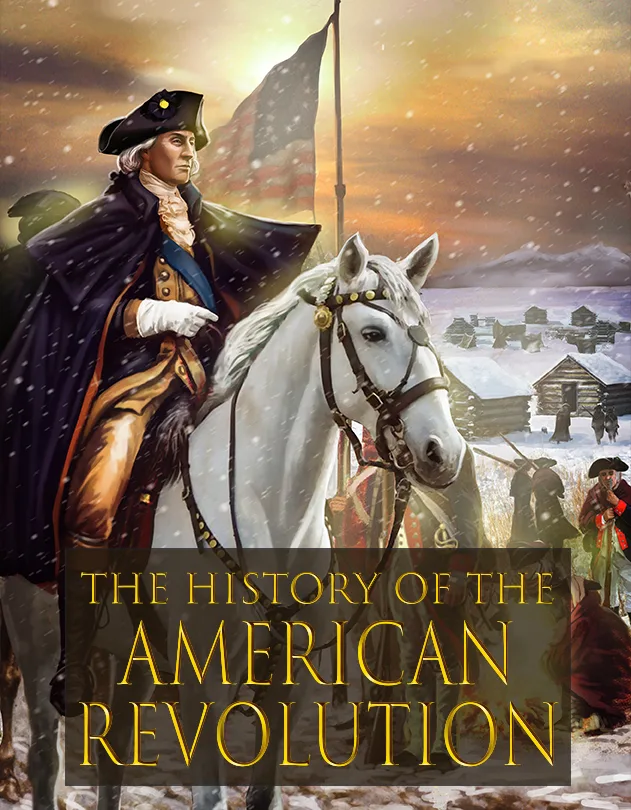
Book 9 — available now
The History of the American Revolution
Ultimate Guide to Learning
The ninth book in the curriculum and the fifth of the Early American History set. Twenty-two chapters across five weeks — from the Proclamation line of 1763 and the acts of Parliament that followed it, through the Boston Massacre, the tea, the two Continental Congresses, Lexington Green and the siege of Boston, Common Sense and the Declaration, Saratoga, Valley Forge and the French alliance, the spy rings, the Sullivan expedition and the war in the Carolinas, to Yorktown, the Treaty of Paris and the army that went home unpaid.
- 22 chapters across 5 weeks, grouped by the five weeks the Guide's own contents page and its three letters to educators group it under
- Living books graded K–5, 6–8 and 9–12 for every week
- Primary sources — the acts of Parliament themselves and the journals of the debates on them; the journals, petitions and resolves of the two Continental Congresses; the depositions taken from witnesses within days of the fighting; the trial records of the Boston Massacre; the pamphlets, broadsides and newspapers printed at the time; the orderly books, returns, general orders and letters of both armies; the articles of capitulation signed at Charleston and at Yorktown; the treaties of 1778 and 1783; the diaries, journals and letters of soldiers, camp followers and civilians; the pension applications filed by survivors decades later; and the battlefields, earthworks and buildings that are still standing
- An exam on every chapter, marked instantly
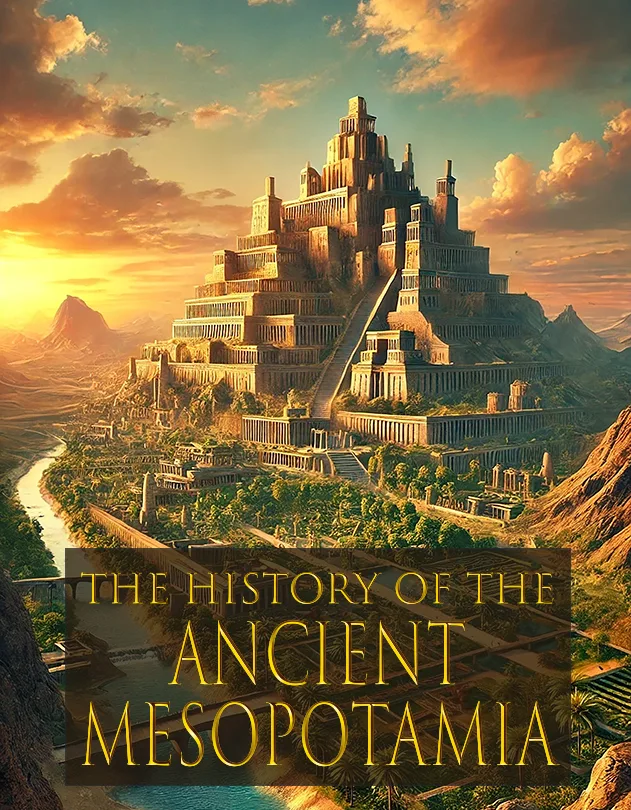
Book 10 — available now
The History of Ancient Mesopotamia
Ultimate Guide to Learning
The tenth book in the curriculum and the fifth of the Ancient Civilizations set. Fifteen chapters across four weeks — from the first farming villages between the Tigris and the Euphrates, through the invention of writing at Uruk, the city-state wars of Lagash and Umma, the first written laws, Sargon's empire and its collapse, Hammurabi's Babylon, the Assyrian war machine, Nineveh's library and Nineveh's fall, Nebuchadnezzar's walls and the exile of Judah, to the night Babylon changed hands and the long centuries in which Mesopotamia belonged to somebody else. TWO THINGS TO KNOW BEFORE YOU START. First, the first-person accounts in both printed editions are HISTORICAL FICTION — written to tell the story, built on archaeology and the surviving record, and not the words of the people named. Second, at the back of the Ultimate Guide, after the fifteen chapters, there are four Cross-Curricular sections — Science, Math, English and Social Studies — to use alongside this course. They are not a fifth week and there is nothing to hand in for them; they are there to be used while you work through the four weeks.
- 15 chapters across 4 weeks, grouped by the four weeks both printed editions' contents pages group the fifteen chapters under
- Living books graded K–5, 6–8 and 9–12 for every week
- Primary sources — the clay tablets themselves — the proto-cuneiform accounts from Uruk, the administrative archives of Girsu, Drehem, Umma and Ur, the Mari letters and the Amarna-era correspondence; the royal inscriptions, victory stelae, boundary stones and foundation deposits the kings buried under their own walls; the law collections of Ur-Nammu, Lipit-Ishtar, Eshnunna and Hammurabi; the Babylonian Chronicles and the astronomical diaries, which are dated night by night; the library Ashurbanipal assembled at Nineveh; the Hebrew scriptures and the Greek historians, read as the much later outside accounts they are; and the excavated cities themselves — Uruk, Ur, Girsu, Nippur, Mari, Nimrud, Nineveh, Khorsabad and Babylon — with the sediment cores and tree rings that date the droughts
- An exam on every chapter, marked instantly
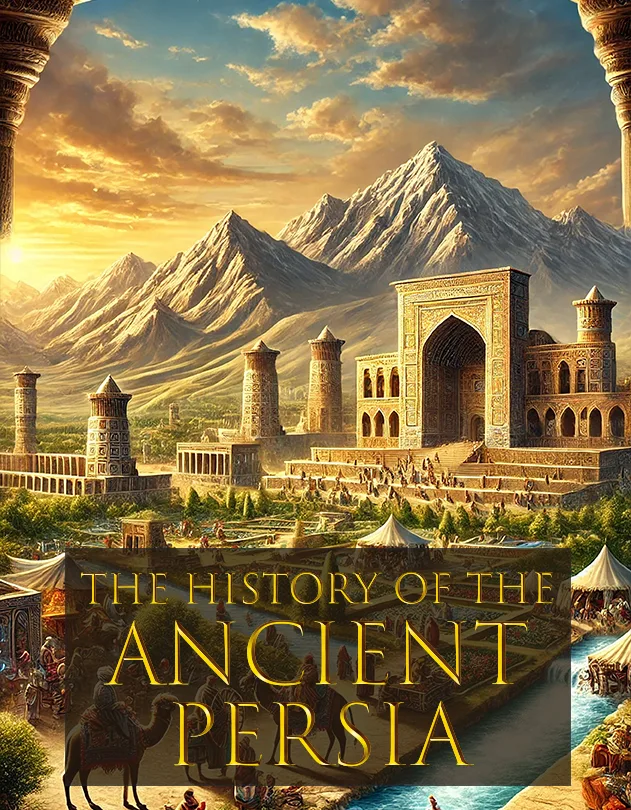
Book 11 — available now
The History of Ancient Persia
Ultimate Guide to Learning
The eleventh book in the curriculum and the sixth of the Ancient Civilizations set. Seventeen chapters across four weeks — from the Zagros passes and the plain of Susa, through Elam and the Medes, the Gutians and the Kassites, the steppe peoples who became the Iranians, and the Scythians and Cimmerians, to Cyrus, the Royal Road, Darius and his cliff, Zoroaster, Lydia and the Greeks, Alexander's twelve years, and the four empires — Seleucid, Parthian, Sassanian and finally the Caliphate — that ruled Iran for the next thousand years. TWO THINGS TO KNOW BEFORE YOU START. First, the first-person accounts in both printed editions are HISTORICAL FICTION — written to tell the story, built on archaeology and the surviving record, and not the words of the people named. The Living edition says so itself, in its own letter to educators: each chapter is told by "a historical figure or cultural representative". Second, at the back of the Ultimate Guide, after the seventeen chapters, there are four Cross-Curricular sections — Math, Science, English and Historical Assessments — to use alongside this course. They are not a fifth week and there is nothing to hand in for them; they are there to be used while you work through the four weeks.
- 17 chapters across 4 weeks, grouped by the four weeks the Guide's own letters to educators group the seventeen chapters under
- Living books graded K–5, 6–8 and 9–12 for every week
- Primary sources — the royal inscriptions the Achaemenids carved where they could not be edited — Behistun on its cliff, Naqsh-e Rustam, the terrace foundations at Persepolis, the gold and silver plaques buried under them; the Persepolis Fortification and Treasury tablets, tens of thousands of Elamite ration receipts that name the workers, the women, the travellers and the rations of an empire that wrote no history of itself; the Elamite inscriptions and the excavated cities of Susa, Chogha Zanbil, Anshan, Ecbatana, Pasargadae and Persepolis; the Babylonian chronicles and the Cyrus Cylinder, read as the royal statements they are; the Sasanian rock reliefs and the trilingual res gestae of Shapur I on the Kaʿba-ye Zartosht, with the inscriptions of the priest Kartir beside them; the coinage, which is the main continuous record the Parthians left; the Avesta and the Gathas, read as a text transmitted orally for centuries before anybody wrote it down; and the outsiders — Herodotus, Ctesias, Xenophon, Arrian, Strabo, Josephus, Plutarch, Ammianus, Procopius, Sebeos and al-Tabari — every one of them writing from beyond the frontier, in another language, and usually much later
- An exam on every chapter, marked instantly
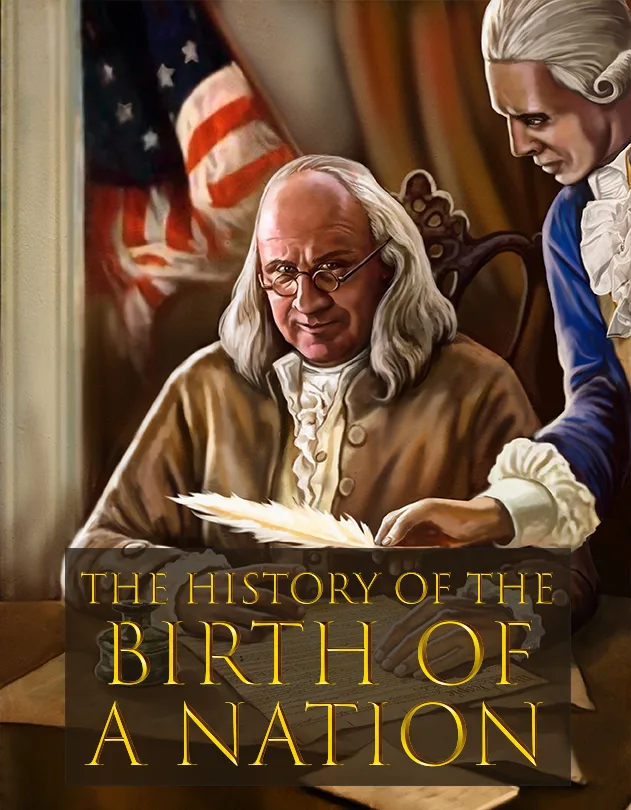
Book 12 — available now
The History of the Birth of a Nation
Ultimate Guide to Learning
The twelfth book in the curriculum and the sixth of the Early American set, directly after the American Revolution. Twenty chapters across five weeks — from the Treaty of Paris and the day Washington handed his commission back to Congress, through the Confederation that could ask for money and not take it, Shays' Rebellion, four months in a shuttered room in Philadelphia, ratification fought out state by state, the first election, the first cabinet, the first courts and the first ten amendments, to Hamilton's finances, the Whiskey Rebellion, the Barbary coast, the first political parties, and the election of 1800. TWO THINGS TO KNOW BEFORE YOU START. First, the first-person accounts in both printed editions are HISTORICAL FICTION — written to tell the story, built on the surviving record, and not the words of the people named. That matters more in this book than in any other in the course, because these particular people left more writing behind than almost anybody else of their century, and all of it is published and free to search: you can check them. Second, at the back of the Ultimate Guide, after the twenty chapters, there are Cross-Curricular sections — Math, Science, English and a set of Testing pages — to use alongside this course. They are not a sixth week and there is nothing to hand in for them; they are there to be used while you work through the five weeks.
- 20 chapters across 5 weeks, grouped by the five weeks both printed editions group the chapters under, with the date bands the books themselves print
- Living books graded K–5, 6–8 and 9–12 for every week
- Primary sources — the documents this period produced in quantity and then kept — the Treaty of Paris, the Articles of Confederation, the Land and Northwest Ordinances, the Constitution and the twelve articles of amendment Congress proposed in 1789, the Judiciary Act, the Bank and Mint acts, Jay's Treaty and Pinckney's Treaty, the Alien and Sedition Acts and the Virginia and Kentucky Resolutions; the debates, which survive unevenly and on purpose — Madison's private notes of a convention sworn to secrecy, Elliot's collection of the state ratifying conventions, the Annals of Congress, and William Maclay's diary of the first Senate, which is the only inside account of a chamber that met behind closed doors for five years; the newspaper war, from the Federalist essays and the Anti-Federalist replies of Brutus, Cato, Centinel and the Federal Farmer to Fenno's Gazette of the United States and Freneau's National Gazette; the private papers, which for this generation are enormous and are edited, indexed and free at Founders Online — Washington, Franklin, Adams, Jefferson, Hamilton, Madison and the Adams family correspondence; the account books and customs returns of the Treasury; and the physical record, from Federal Hall and Independence Hall to the rectangular survey of the Northwest, which can still be seen from an aeroplane window
- An exam on every chapter, marked instantly
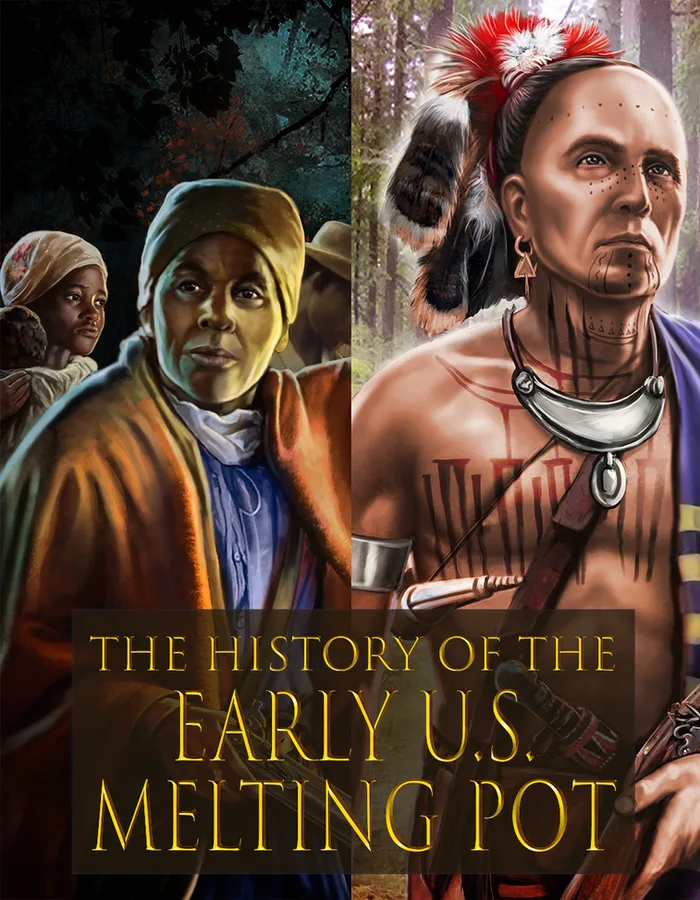
Book 13 — available now
The History of the Melting Pot of the United States
Ultimate Guide to Learning
The thirteenth book in the curriculum and the ninth of the Early American set. Eighteen chapters across four weeks, and each week is a different set of people arriving in, or already living in, the same country. WEEK ONE is slavery and the African American melding — where the trade came from, how colonial law turned servitude into a hereditary status, how people resisted it, what the Northwest Ordinance did about it, and how abolition grew. WEEK TWO is Native America — the cultures that were here first, the loss of land, the treaties made with a new federal government, and what survived. WEEK THREE is religion — the colonies founded on it, two great awakenings, the churches in the Revolution, and the faiths that were born here. WEEK FOUR is immigration — who came, why they left, what the law did about them, and what the country argued about. TWO THINGS TO KNOW BEFORE YOU START. First, the first-person accounts in both printed editions are HISTORICAL FICTION — written to tell the story, built on the surviving record, and not the words of the people named. That matters more in this book than in any other in the course, because its narrators are enslaved people, Native leaders and immigrants, and several of them left real testimony you can read instead: Olaudah Equiano wrote a book, Frederick Douglass wrote three, Sarah Winnemucca wrote a memoir, Phillis Wheatley published poems and letters, and Omar ibn Said wrote his life in Arabic in North Carolina in 1831. Second, at the back of the Ultimate Guide, after the eighteen chapters, there are Cross-Curricular sections — Math, Science, English and a set of Testing pages — to use alongside this course. They are not a fifth week and there is nothing to hand in for them; they are there to be used while you work through the four weeks.
- 18 chapters across 4 weeks, grouped by the four weeks both printed editions group the chapters under, each week following one population through the same stretch of years rather than following the calendar
- Living books graded K–5, 6–8 and 9–12 for every week
- Primary sources — the documents this subject produced and then kept, which is more of them than students expect — the STATUTES, from the Massachusetts Body of Liberties of 1641 and Virginia's partus sequitur ventrem act of 1662 to the Northwest Ordinance, the Naturalization Acts of 1790, 1795, 1798 and 1802, the Steerage Act of 1819 and the Indian Removal Act of 1830; the TREATIES, which are public documents with signatures on them — Fort Pitt (1778), Fort Stanwix (1784), Greenville (1795), Fort Wayne (1809), Ghent (1814), Holston (1791), New Echota (1835) and Fort Laramie (1868); the COURT RECORDS, from the Northampton County order in Johnson v. Parker in 1655 and Elizabeth Key's freedom suit of 1656 to the Quock Walker cases, Cherokee Nation v. Georgia, Worcester v. Georgia and Dred Scott v. Sandford; the NARRATIVES written by people who were enslaved — Equiano (1789), Douglass (1845, 1855, 1881), Harriet Jacobs (1861), and the Arabic manuscript of Omar ibn Said (1831); the PETITIONS, above all the Cherokee protest against the Treaty of New Echota carrying about fifteen thousand names; the SHIPPING RECORD, which after 1820 is a federal series because the Steerage Act required masters to hand in a manifest of every passenger's name, age, sex and occupation; the CENSUS from 1790 onward; the SERMONS AND TRACTS, which this period printed by the thousand — Mayhew, Edwards, Whitefield, Woolman, Benezet, Walker's Appeal, the Liberator; and the CHURCH AND CONGREGATION RECORDS, from Shearith Israel's minutes to Richard Allen's account of walking out of St George's
- An exam on every chapter, marked instantly
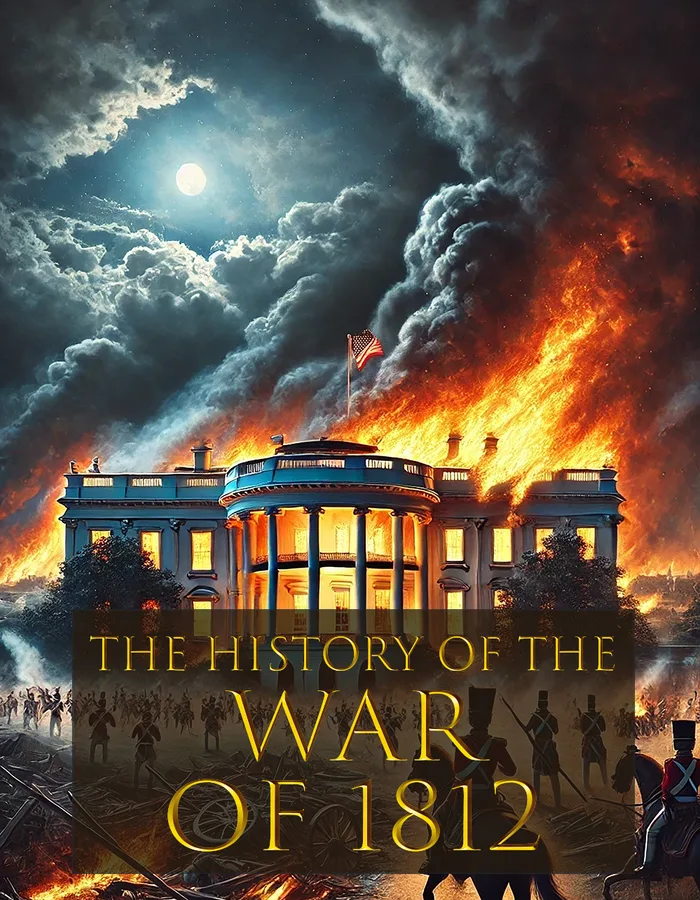
Book 14 — available now
The History of the War of 1812
Ultimate Guide to Learning
The fourteenth book in the curriculum and the seventh of the Early American set. Sixteen chapters across four weeks — from the Napoleonic Wars that turned the Atlantic into a battlefield a neutral country could not cross, through British forts and British muskets on the American frontier, the young congressmen who wanted a war, Jefferson's embargo and the unready nation Madison inherited, a surrendered Detroit and a burned York, six frigates and five hundred privateers, nine ships built out of green timber on Lake Erie, a capital in flames and a flag still flying over Baltimore, a Tennessee major general who marched his militia home at his own expense and then won at New Orleans, four months of argument in a Flemish town, and the tariffs, banks and factories the war left behind. TWO THINGS TO KNOW BEFORE YOU START. First, the first-person accounts in both printed editions are HISTORICAL FICTION — written to tell the story, built on the surviving record, and not the words of the people named. That matters here because the record for this war is enormous and free: Madison's messages to Congress, the Annals of Congress, the Ghent correspondence, ships' logs and captains' letters, Dolley Madison's own account of the day she left the President's House, and the speeches of Tecumseh as interpreters took them down. You can check almost everything in this book, which is exactly why the invented parts of it matter. Second, at the back of the Ultimate Guide, after the sixteen chapters, there are Cross-Curricular sections — Math, Science, English and a set of Testing pages — to use alongside this course. They are not a fifth week and there is nothing to hand in for them.
- 16 chapters across 4 weeks, grouped by the four weeks both printed editions group the chapters under, with the date bands the chapters themselves establish
- Living books graded K–5, 6–8 and 9–12 for every week
- Primary sources — the paper a constitutional republic at war cannot help producing, almost all of it published and free — Madison's war message of 1 June 1812 and his annual messages, the Annals of Congress for the debates and the roll calls of 4 and 17 June 1812, the statutes themselves from the Embargo Act to the Tariff of 1816, and the Treaty of Ghent in eleven articles; the DIPLOMATIC RECORD, which for this war is unusually complete — the instructions to the five American commissioners, their joint and separate letters home, John Quincy Adams's diary kept daily through the negotiation, and the British notes in reply; the NAVAL RECORD, which is the best-kept of all: ships' logs, captains' letters to the Secretary of the Navy, courts of inquiry, prize court proceedings for hundreds of privateer captures, and the surviving hulls of the Constitution at Boston and the Niagara at Erie; the ARMY's courts-martial, including William Hull's; NATIVE TESTIMONY, which survives as interpreters and clerks wrote it down rather than as the speakers left it — Tecumseh's speeches at Vincennes and at Amherstburg, Black Hawk's autobiography of 1833, and the treaty councils; PRIVATE PAPERS, from Dolley Madison's letters to her sister to the account books of Stephen Girard; the NEWSPAPERS, which are how most of this reached most people — Niles' Weekly Register from 1811, the Baltimore Patriot printing "Defence of Fort M'Henry" on 20 September 1814, and the Federalist papers of New England; and the PHYSICAL record, from the earthwork line at Chalmette to the fifteen-star flag itself, which is in the Smithsonian and is thirty feet by forty-two
- An exam on every chapter, marked instantly
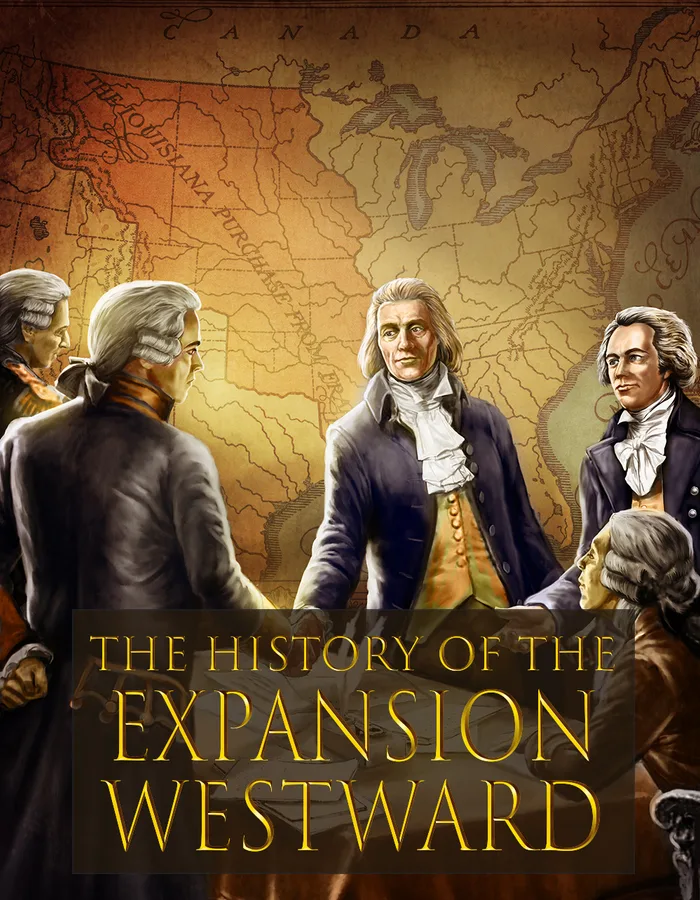
Book 15 — available now
The History of the U.S. Westward Expansion
Ultimate Guide to Learning
The fifteenth book in the curriculum and the eighth of the Early American set. Eighteen chapters across four weeks — from a treaty signed in Paris in 1803 that doubled the size of the United States, through the first cabins west of the mountains, a line drawn across the map at 36°30′, a president who wanted roads and canals and an observatory, the Indian Removal Act and the Cherokee Nation's case against it, Texas as a Mexican province, a republic and a state, the presidents who argued over annexing it, the Oregon Trail, Polk and the phrase "manifest destiny", the war with Mexico, the gold at Coloma, the Latter-day Saints' exodus to the Great Basin, the Compromise of 1850 and the Kansas–Nebraska Act, Bleeding Kansas, the towns of the south-western border, California and Nevada, the Homestead Act, and the wars on the Plains and in the mountains that ended at Wounded Knee. TWO THINGS TO KNOW BEFORE YOU START. First, the first-person accounts in both printed editions are HISTORICAL FICTION — written to tell the story, built on the surviving record, and not the words of the people named. That matters here because the record for this period is large and most of it is free: the treaties, the acts of Congress and the roll calls, the presidents' annual messages, the Cherokee Nation's memorials to Congress, the Supreme Court's opinions, the Texas Declaration of Independence and Travis's letter from the Alamo, the Treaty of Guadalupe Hidalgo in English and Spanish, overland diaries by the thousand, and the testimony of Native leaders as interpreters and reporters took it down. You can check almost everything in this book, which is exactly why the invented parts of it matter. Second, at the back of the Ultimate Guide, after the eighteen chapters, there are Cross-Curricular sections — Social Studies, Math, Science, English and a set of Testing pages — to use alongside this course. They are not a fifth week and there is nothing to hand in for them.
- 18 chapters across 4 weeks, grouped by the four weeks both printed editions group the chapters under, with the date bands the chapters themselves establish
- Living books graded K–5, 6–8 and 9–12 for every week
- Primary sources — the paper a growing republic produced about itself and about the people whose land it was entering — TREATIES, from the Louisiana Purchase of 1803 and the Adams–Onís Treaty of 1819 to New Echota, Guadalupe Hidalgo, Fort Laramie and the Nez Perce agreements; the ACTS OF CONGRESS and the roll calls behind them, from the Missouri enabling act and the Indian Removal Act to the Compromise of 1850, the Kansas–Nebraska Act and the Homestead Act, in the Statutes at Large and the Congressional Globe; the PRESIDENTS' MESSAGES, which are where Jackson argued for removal and Polk asked for war; the SUPREME COURT'S OPINIONS in Cherokee Nation v. Georgia and Worcester v. Georgia; NATIVE TESTIMONY, in the Cherokee memorials to Congress written and printed by the Cherokee themselves, in treaty-council minutes, in Sarah Winnemucca's Life Among the Piutes of 1883, and in speeches recorded by interpreters and reporters, whose wording is theirs; MEXICAN AND TEXAN documents — the Texas Declaration of Independence, Santa Anna's own Manifesto of 1837, the Mexican government's protests and its history of the war; the EXPLORERS' JOURNALS, from Lewis and Clark to Frémont's reports; the OVERLAND DIARIES of emigrants to Oregon, California and Utah, kept by the thousand and many of them in print; the NEWSPAPERS, from the Cherokee Phoenix and the Democratic Review to the California Star; and the ARMY'S REPORTS and the congressional inquiries into Sand Creek and the Plains wars
- An exam on every chapter, marked instantly
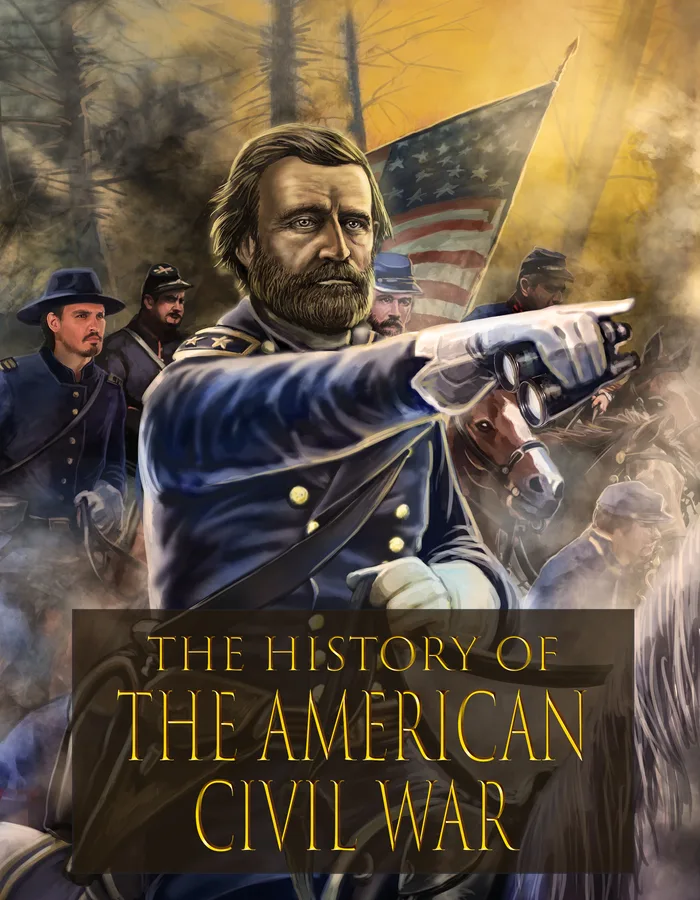
Book 16 — available now
The History of the U.S. Civil War
Ultimate Guide to Learning
The sixteenth book in the curriculum and the last of the ten Early American books. Seventeen chapters across four weeks — from the compromises and the debates of the 1850s, through the election of 1860 and the winter in which seven states left the Union, the bombardment of Fort Sumter, the first battles and the generals who fought them, Shiloh and Antietam and the Emancipation Proclamation, the Pacific Railway Act and the Homestead Act, Mexico's victory at Puebla on 5 May 1862, the Black soldiers and sailors of the Union, Gettysburg and Vicksburg, the home front and the women who nursed the armies, the spies of both sides, Grant against Lee from the Wilderness to Petersburg, Sherman from Atlanta to Savannah, an election held in the middle of a war, the blockade and the ironclads, the fall of Richmond and the surrender at Appomattox, and the night at Ford's Theatre and what followed it. TWO THINGS TO KNOW BEFORE YOU START. First, the first-person accounts in both printed editions are HISTORICAL FICTION — written to tell the story, built on the surviving record, and not the words of the people named. That matters here because this war left more paper than any before it: the Official Records of the Union and Confederate Armies and Navies in 158 volumes, the secession conventions' declarations, both presidents' messages, the letters between Grant and Lee at Appomattox, soldiers' diaries and letters home, and the words of enslaved and freed people in their own narratives, in the Freedmen's Bureau records and in the interviews taken down in the 1930s. You can check almost everything in this book, and this course tells you where. Second, at the back of the Ultimate Guide, after the seventeen chapters, there are Cross-Curricular sections — Math, Science, English and a set of Testing pages — to use alongside this course. They are not a fifth week and there is nothing to hand in for them.
- 17 chapters across 4 weeks, grouped by the four weeks both printed editions group the chapters under, with the Guide's own date bands: Causes & Early Battles (1850s–1862), Turning Points & Emancipation (1863), The Final Years & Strategies (1864–1865) and The End of the War (1865)
- Living books graded K–5, 6–8 and 9–12 for every week
- Primary sources — the paper a divided country produced about its own war — the SECESSION ORDINANCES and the declarations of causes that South Carolina, Mississippi, Georgia and Texas published with them; the PRESIDENTS' WORDS on both sides, Lincoln's inaugurals, messages, letters and proclamations and Jefferson Davis's inaugural and messages to the Confederate Congress; the ACTS OF CONGRESS, from the Kansas–Nebraska Act to the Confiscation Acts, the Pacific Railway Act, the Homestead Act and the Thirteenth Amendment; the OFFICIAL RECORDS OF THE UNION AND CONFEDERATE ARMIES AND NAVIES, in which the commanders of both sides reported the same battles; the SOLDIERS' LETTERS AND DIARIES, and the civilians' — Mary Chesnut's, Dolly Lunt Burge's, Carrie Berry's; the WORDS OF ENSLAVED AND FREED PEOPLE, in Frederick Douglass's speeches and papers, Susie King Taylor's Reminiscences, the colloquy with Sherman at Savannah in January 1865, the Freedmen's Bureau records and the Federal Writers' Project interviews of the 1930s, labelled as such; the NEWSPAPERS of both sections; the MEXICAN AND FRENCH DOCUMENTS of the intervention, from General Zaragoza's report of 5 May 1862 to Seward's dispatches to Paris; and the RECORD OF THE MILITARY COMMISSION that tried the Lincoln conspirators in 1865
- An exam on every chapter, marked instantly
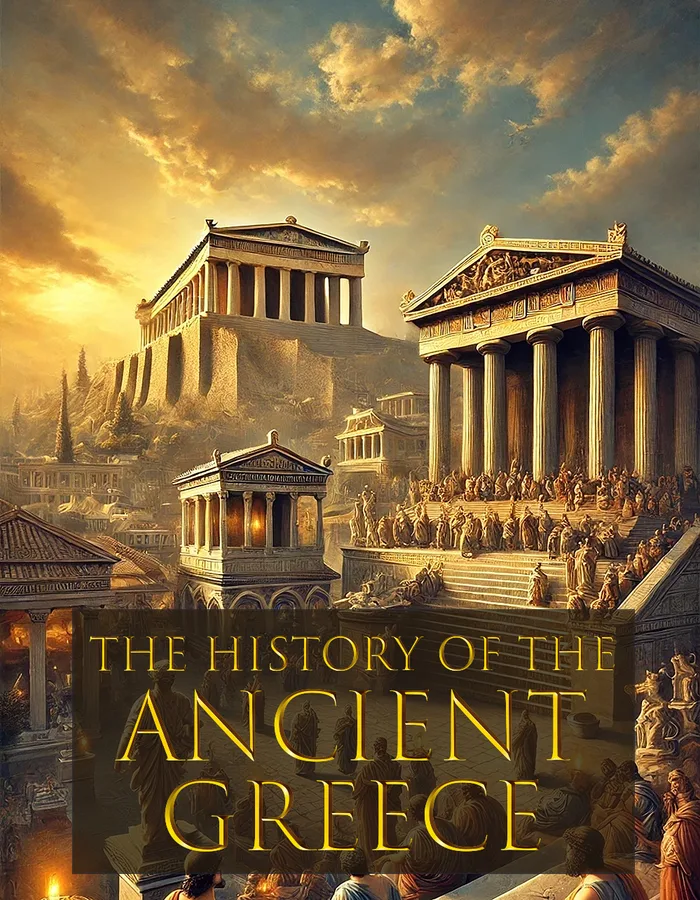
Book 17 — available now
The History of Ancient Greece
Ultimate Guide to Learning
The seventeenth book in the curriculum and the seventh of the Ancient Civilizations set. Sixteen chapters across four weeks — from the palaces of Minoan Crete and the gold of Mycenae, through the ships and letters of the Bronze Age world and the centuries after its palaces burned, the rise of the city-state, the colonies from Spain to the Black Sea and the first Olympic Games, to Marathon, Thermopylae and Salamis, the Athens of Pericles, Socrates and the philosophers, the long war between Athens and Sparta and the theatre that was played through it, and then Alexander, the kingdoms his generals carved out of his empire, the scientists of Alexandria and Syracuse, and the Roman conquest. TWO THINGS TO KNOW BEFORE YOU START. First, the first-person accounts in both printed editions are HISTORICAL FICTION — written to tell the story, informed by archaeology and the surviving record, and not the words of the people named. In this book many of the narrators are not even Greeks of the chapter's own age: pharaohs, Hittite kings, the excavators Arthur Evans and Heinrich Schliemann, and figures of myth such as King Minos. The Greeks, though, left more of their own words than any people before them: Homer and Hesiod, the histories of Herodotus, Thucydides and Xenophon, Plato's dialogues, the plays, the laws and decrees the Athenians carved in stone, and, later, Polybius, Plutarch, Arrian and Pausanias. The spade has added the rest — Knossos, Mycenae, the clay tablets of Pylos, Olympia and the Athenian Agora. This course tells you, chapter by chapter, which things the excavations show, which things an ancient author reports, and which things are myth that the Greeks told about their own past. Second, at the back of the Ultimate Guide, after the sixteen chapters, there are Cross-Curricular sections — Math, Science, English and Social Studies — and a set of History Assessments with an answer key, to use alongside this course. They are not a fifth week and there is nothing to hand in for them.
- 16 chapters across 4 weeks, grouped by the four periods both printed editions group the chapters under — Early Greece and the Bronze Age (c. 3000–1100 BC), the Dark Ages and Archaic Period (c. 1100–500 BC), the Classical Period (c. 500–323 BC) and the Hellenistic Period (c. 323–31 BC)
- Living books graded K–5, 6–8 and 9–12 for every week
- Primary sources — the records the Greeks and their neighbours left and the ground that kept them — the PALACES AND TOMBS excavated at Knossos, Mycenae, Pylos and Akrotiri and the Bronze Age wreck at Uluburun; the LINEAR B TABLETS, the palaces' own accounts in the earliest written Greek; the HITTITE AND EGYPTIAN RECORDS of the Aegean peoples, the Ahhiyawa letters and the Medinet Habu inscription; the POETS, Homer and Hesiod, and what later Greeks believed about their past; the HISTORIANS, Herodotus, Thucydides, Xenophon and Polybius, each writing of his own time or the generation before it, and the later biographers and travellers, Plutarch, Arrian and Pausanias; the INSCRIPTIONS the Athenians set up, Draco's homicide law, the tribute lists of their empire and their decrees; the OSTRAKA and the finds of the Athenian Agora and of Olympia; the PHILOSOPHERS AND PHYSICIANS in their own words, Plato, Aristotle, the Hippocratic writers, Euclid and Archimedes; and the PLAYS of Aeschylus, Sophocles, Euripides and Aristophanes
- An exam on every chapter, marked instantly
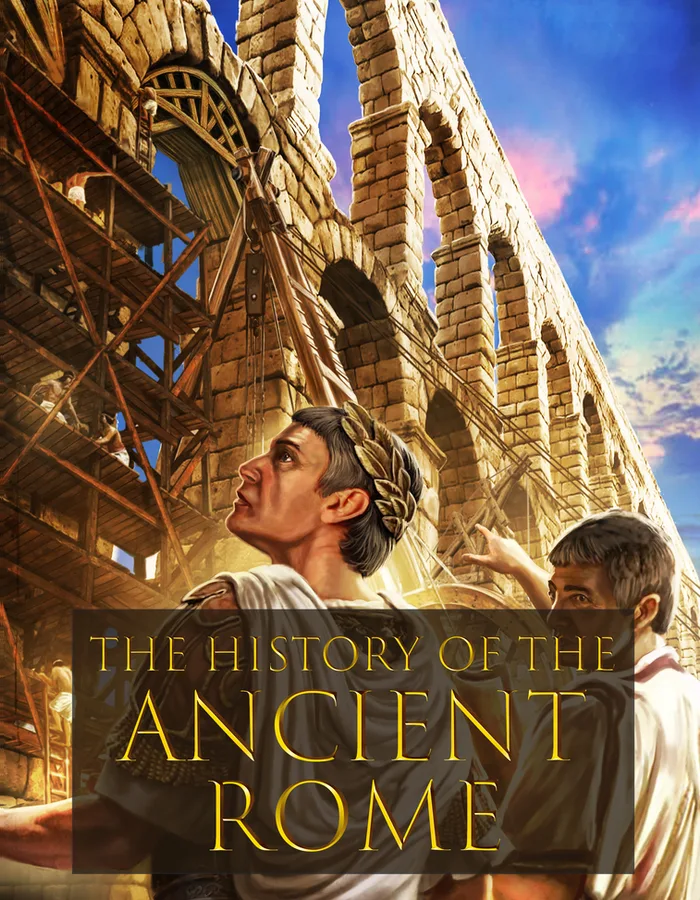
Book 18 — available now
The History of Ancient Rome
Ultimate Guide to Learning
The eighteenth book in the curriculum and the eighth of the Ancient Civilizations set. Sixteen chapters across four weeks — from the huts on the Palatine and the legends of Romulus and the kings, through the Republic's conquest of Italy, the wars with Carthage, the great estates and the Gracchi, Marius and Sulla, Caesar, the Ides of March and Augustus; then the two centuries of the Roman peace, life in the city and in Pompeii, the roads, aqueducts and domes, the gods of Rome and the first Christians; and last the crisis of the third century, Diocletian and Constantine, the Goths, Alaric and Attila, and the end of the western emperors in AD 476. TWO THINGS TO KNOW BEFORE YOU START. First, the first-person accounts in both printed editions are HISTORICAL FICTION — written to tell the story, informed by archaeology and the surviving record, and not the words of the people named. Most of the narrators are real Romans, but nearly all of them speak of things that happened after they died, and a few are invented. The Romans themselves left a great deal: Livy, Polybius, Sallust, Caesar's own war reports, Cicero's speeches and letters, Augustus' account of his deeds, Suetonius, Tacitus, Plutarch, Pliny's letters, Frontinus, Josephus, Ammianus — and the ground has added the rest: the Palatine huts, the Forum, Pompeii and Herculaneum, the forts of Hadrian's Wall and their letters. The stories of Rome's founding are legends that Livy and Plutarch wrote down seven centuries later, and this course says so. Second, at the back of the Ultimate Guide, after the sixteen chapters, there are Cross-Curricular sections — Math, Science, Social Studies and English — and a set of Cross-Curricular Testing questions with answer keys, to use alongside this course. They are not a fifth week and there is nothing to hand in for them.
- 16 chapters across 4 weeks, grouped by the four periods the Ultimate Guide groups the chapters under — the Rise of Rome (753–146 BC), the Fall of the Republic and the Rise of the Empire (146–27 BC), the Roman Empire and Society (27 BC–AD 235) and the Decline and Fall of Rome (AD 235–476)
- Living books graded K–5, 6–8 and 9–12 for every week
- Primary sources — the records the Romans and their neighbours left and the ground that kept them — the EXCAVATED SITES, from the Iron Age huts of the Palatine and the Forum to the burnt Byrsa of Carthage, Alesia's siege lines, the Teutoburg battlefield at Kalkriese, Pompeii and Herculaneum and the forts of Hadrian's Wall; the INSCRIPTIONS, from the Lapis Niger to Augustus' Res Gestae, Diocletian's Price Edict and Shapur's boast of Valerian's capture; the WOODEN TABLETS of Vindolanda and the PAPYRI of Egypt, among them the certificates of sacrifice of AD 250; the COINS, from the Social War to Brutus' 'Ides of March' and Aurelian's 'restorer of the world'; the HISTORIANS, Polybius, Livy, Sallust, Tacitus, Cassius Dio and Ammianus, and the BIOGRAPHERS, Plutarch and Suetonius; the MEN OF AFFAIRS in their own words, Caesar, Cicero, Augustus, Frontinus and the younger Pliny; the POETS and SATIRISTS, Virgil, Horace, Juvenal and Martial; and the JEWISH AND CHRISTIAN WRITERS, Josephus, Lactantius, Eusebius, Jerome and Augustine
- An exam on every chapter, marked instantly
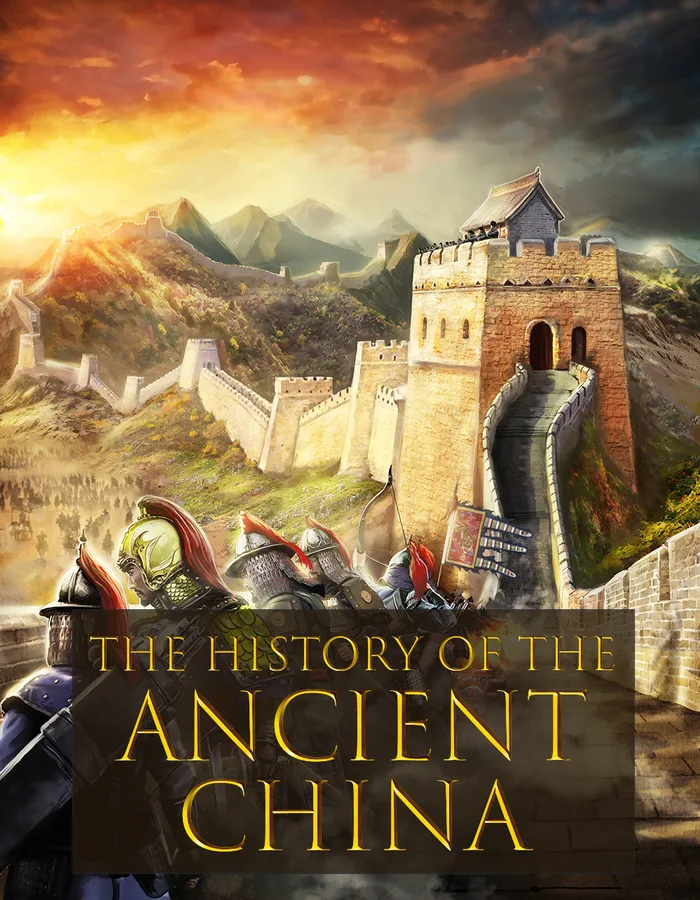
Book 19 — available now
The History of Ancient China
Ultimate Guide to Learning
The nineteenth book in the curriculum and the ninth of the Ancient Civilizations set. Sixteen chapters across four weeks — from the Yellow and Yangtze rivers and the first farming villages, the Xia kings of tradition, the Shang of the oracle bones and the Zhou and their Mandate of Heaven; through the Spring and Autumn period and the thinkers it produced, Confucius, Laozi and the Legalists; the Warring States, the First Emperor of Qin and the Han from Liu Bang to Emperor Wu and the Silk Road; and last life, belief and learning under the Han, the end of the Han in AD 220, and China's frontiers set beside the end of the western Roman emperors. TWO THINGS TO KNOW BEFORE YOU START. First, the first-person accounts in both printed editions are HISTORICAL FICTION — written to tell the story, informed by archaeology and the surviving record, and not the words of the people named. Most of the narrators are real people, a few are figures of tradition, and some are invented. The Chinese record is long: the oracle bones and bronze inscriptions of the Shang and Zhou, the Book of Documents and the Book of Songs, the Zuozhuan, the Analects, Mencius, the Dao De Jing, Zhuangzi, Xunzi and Han Feizi, Sima Qian's Shiji, Ban Gu's Han shu and the Hou Han shu — and the ground has added the rest, from Banpo and Anyang to the terracotta army, the bamboo slips of Shuihudi and the silk books of Mawangdui. The earliest kings are known only from what those later books say, and this course says so. Second, at the back of the Ultimate Guide, after the chapters (pages 291–327), there are Cross-Curricular sections — Math, Science, Social Studies and English — and Cross-Curricular Testing questions with answer keys, to use alongside this course. They are not a fifth week and there is nothing to hand in for them.
- 16 chapters across 4 weeks, grouped by the four weeks the Ultimate Guide groups the chapters under — the Foundation of Ancient China (2400–256 BC), Conflict and Philosophy (the Eastern Zhou), Imperial Unity and Expansion (475 BC–AD 220) and Culture, Legacy and Daily Life
- Living books graded K–5, 6–8 and 9–12 for every week
- Primary sources — the records the Chinese left and the ground that kept them — the EXCAVATED SITES, from the villages of Banpo and the palaces of Erlitou to Yinxu at Anyang and the tomb of Fu Hao, the First Emperor's mausoleum and its pits, the tombs of Mawangdui and Mancheng and the Han capital at Chang'an; the INSCRIPTIONS, from the oracle bones of the Shang kings to the Zhou bronzes and the First Emperor's edicts on weights and measures; the BAMBOO SLIPS AND SILK BOOKS, Shuihudi, Guodian and Mawangdui; the CLASSICS, the Book of Documents and the Book of Songs; the THINKERS in their own books, Confucius' Analects, Mencius, Laozi, Zhuangzi, Xunzi and Han Feizi; and the HISTORIANS, the Zuozhuan, Sima Qian, Ban Gu, Ban Zhao and the Hou Han shu
- An exam on every chapter, marked instantly
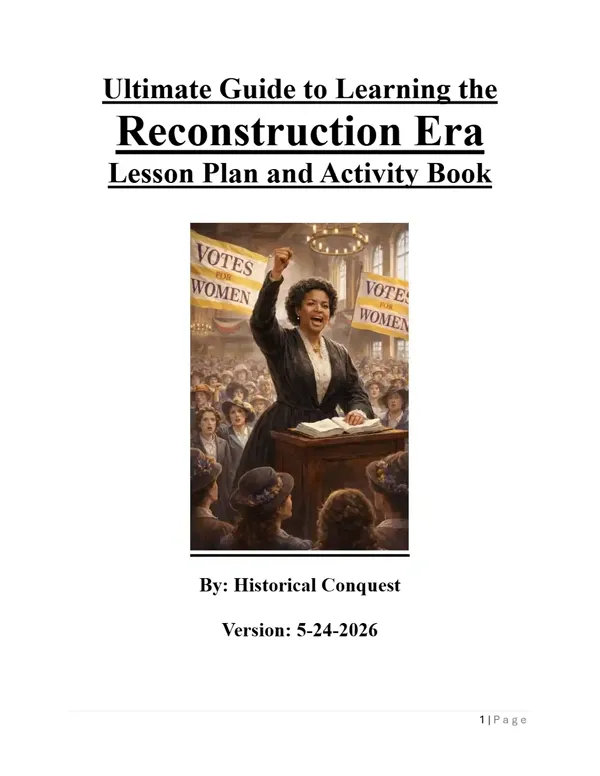
Book 20 — available now
The History of the Reconstruction Era
Ultimate Guide to Learning
The twentieth book in the curriculum and the second of the Late American History set. Seventeen chapters across four weeks — from the Emancipation Proclamation and the Thirteenth Amendment, the death of Lincoln and Andrew Johnson's plan for the South; through the Reconstruction Acts, the Freedmen's Bureau, the Fourteenth and Fifteenth Amendments, the first Black members of Congress and the impeachment of a president; then the Black Codes and sharecropping, the Ku Klux Klan and the laws and trials against it, women's petitions, Southern industry and the Supreme Court's narrowing of the new amendments; and last the disputed election of 1876, the end of federal Reconstruction in 1877, the laws of separation, and Plessy v. Ferguson in 1896. TWO THINGS TO KNOW BEFORE YOU START. First, the first-person accounts in both printed editions are HISTORICAL FICTION — written to tell the story, informed by the surviving record, and not the words of the people named. The narrators are real people, but some speak of things that happened after they died, and some meet in scenes that never took place. The record itself is very large: the laws and amendments, the presidents' messages and vetoes, the Congressional Globe, the Freedmen's Bureau records, the sworn testimony of 1871–72, the Supreme Court's opinions and dissents, the newspapers of the day, and the letters, speeches and memoirs of the people who lived it — and this course quotes them. Second, at the back of the Ultimate Guide, after the chapters (pages 331–366), there are Cross-Curricular sections — Math, Science, Health, Social Studies and English — and comprehension questions with answer keys, to use alongside this course. They are not a fifth week and there is nothing to hand in for them.
- 17 chapters across 4 weeks, grouped by the four weeks of the Ultimate Guide's own Adventure Path — The War Ends & The Nation Rebuilds (1863–1865), Radical Reconstruction & New Constitutional America (1866–1870), Resistance, Violence & the Struggle for Equality (1866–1875) and The End of Reconstruction & Its Long Shadow (1876–1900)
- Living books graded K–5, 6–8 and 9–12 for every week
- Primary sources — the records the people of the time made — the LAWS AND AMENDMENTS as Congress passed them and the states ratified them; the PRESIDENTS' proclamations, messages and veto messages; the CONGRESSIONAL GLOBE and its roll calls; the FREEDMEN'S BUREAU's reports, contracts and letters; the SWORN TESTIMONY taken by the Joint Select Committee in 1871–72 and the records of the trials that followed; the SUPREME COURT's opinions and dissents; the ELECTION RETURNS and the Electoral Commission's record; the NEWSPAPERS of the day; and the people's own LETTERS, SPEECHES, PETITIONS AND MEMOIRS, among them Frederick Douglass, Jourdon Anderson, Ida B. Wells and Booker T. Washington
- An exam on every chapter, marked instantly
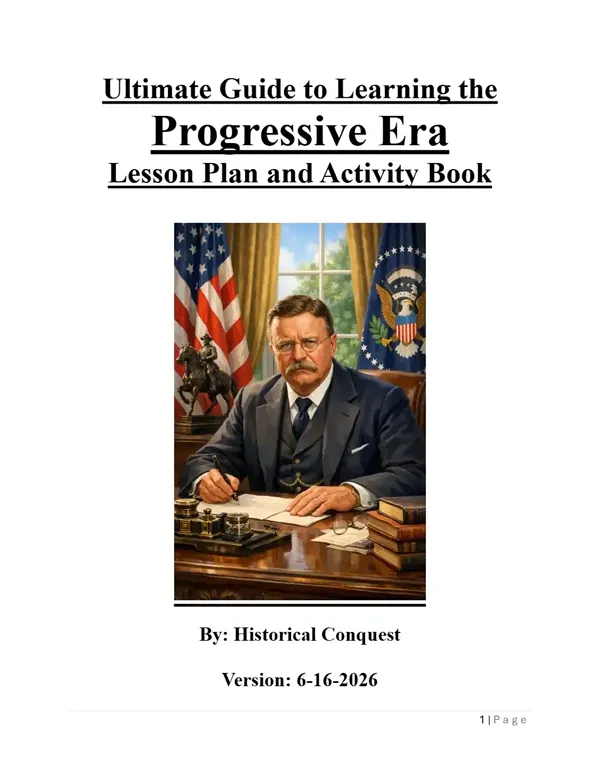
Book 21 — available now
The History of the Progressive Era
Ultimate Guide to Learning
The twenty-first book in the curriculum and the third of the Late American History set. Eighteen chapters across four weeks — first the problems the reformers set out to solve: the tenements and factories of the new industrial cities, the political machines, the laws of segregation, the farmers' grievances and adulterated food; then the reformers and what they did: the muckraking magazines, the antitrust suits, the labor and child-labor laws, the suffrage campaigns and the conservation of forests and parks; then the reforms the Guide groups as going too far: eugenics and the sterilization laws, the immigration acts, the wartime Espionage and Sedition Acts, and Prohibition; and last segregation within the reform era, the reformers who wrote that experts should guide the public, and the amendments that widened the vote, ending with the Nineteenth in 1920. TWO THINGS TO KNOW BEFORE YOU START. First, the first-person accounts in both printed editions are HISTORICAL FICTION — written to tell the story, informed by the surviving record, and not the words of the people named. Most narrators are real people, but some speak of things that happened after they died, a few are invented, and some meet in scenes that never took place. The record itself is very large: the laws and amendments, the Supreme Court's opinions and dissents, the reports of Congress and of commissions, the reformers' and their opponents' own books and articles, the census and the photographs of Jacob Riis and Lewis Hine — and this course quotes them. Second, at the back of the Ultimate Guide, after the chapters (pages 355–391), there are Cross-Curricular sections — Math, Science, Health, Social Studies and English — and questions with answer keys, to use alongside this course. They are not a fifth week and there is nothing to hand in for them.
- 18 chapters across 4 weeks, grouped by the four weeks of the Ultimate Guide's own outline — The Problems Progressives Tried to Solve (c. 1890–1905), Reformers and Their Solutions (c. 1900–1912), When Reform Goes Too Far (c. 1905–1920) and The Limits and Legacy of Progressivism (c. 1910–1920)
- Living books graded K–5, 6–8 and 9–12 for every week
- Primary sources — the records the people of the time made — the LAWS AND AMENDMENTS as Congress passed them and the states ratified them; the SUPREME COURT's opinions and dissents, from Lochner and Muller to Schenck and Buck v. Bell; the HEARINGS AND REPORTS of Congress and of commissions, among them the Dillingham Commission and the Commission on Industrial Relations; the PRESIDENTS' messages and speeches; the MAGAZINES AND NEWSPAPERS of the day; the CENSUS and the labor statistics; the PHOTOGRAPHS of Jacob Riis and Lewis Hine; and the people's own BOOKS, SPEECHES AND PETITIONS — Jane Addams, Ida Tarbell, Upton Sinclair, Ida B. Wells, W. E. B. Du Bois and Booker T. Washington, the suffragists, the conservationists and the reformers' opponents
- An exam on every chapter, marked instantly

Book 22 — available now
The History of World War I
Ultimate Guide to Learning
The twenty-second book in the curriculum and the fourth of the Late American History set. Nineteen chapters across four weeks — first the road to war: Europe before 1914, the armies, alliances and empires, the Balkans, and the murder at Sarajevo and the July Crisis; then the war of 1914–1916: the opening campaigns, the trenches, the new weapons, Verdun and the Somme, and the war in the east and beyond Europe; then total war and its turning points: the home fronts, the war at sea, America's entry, the war in the air, the revolutions in Russia and the last offensives; and last the peace settlement: the Treaty of Versailles, the new map of the world, and the war's legacy. TWO THINGS TO KNOW BEFORE YOU START. First, the first-person accounts in both printed editions are HISTORICAL FICTION — written to tell the story, informed by the surviving record, and not the words of the people named. Most narrators are real people, but some speak of things that happened after they died, and some meet in scenes that never took place. The record itself is very large: the notes, telegrams and treaties of the governments, the soldiers' and nurses' letters and diaries, the despatches and casualty returns, the newspapers, the photographs, and the excavations of the battlefields — and this course quotes them. Second, at the back of the Ultimate Guide, after the chapters (pages 358–395), there are Cross-Curricular sections — Math, Science, Social Studies and English — and tests, to use alongside this course. They are not a fifth week and there is nothing to hand in for them.
- 19 chapters across 4 weeks, grouped by the four weeks of the Ultimate Guide's own outline — The Road to War (Pre-1914 Causes & Outbreak), A World at War (1914–1916), Total War and Turning Points (1916–1918) and the Peace Settlement
- Living books graded K–5, 6–8 and 9–12 for every week
- Primary sources — the records the people of the time made — the governments' NOTES, ULTIMATUMS AND TELEGRAMS, from Vienna's note to Serbia and Serbia's reply to the Zimmermann telegram; the TREATIES AND ARMISTICES as signed, from the Treaty of London of 1839 to Brest-Litovsk and Versailles; the SPEECHES of the statesmen to their parliaments and congresses; the commanders' DESPATCHES and the war diaries; the CASUALTY RETURNS and the registers of the war-graves commissions; the soldiers' and nurses' own LETTERS, DIARIES AND MEMOIRS; the NEWSPAPERS AND POSTERS of the day; the PHOTOGRAPHS; and the EXCAVATIONS of the battlefields
- An exam on every chapter, marked instantly
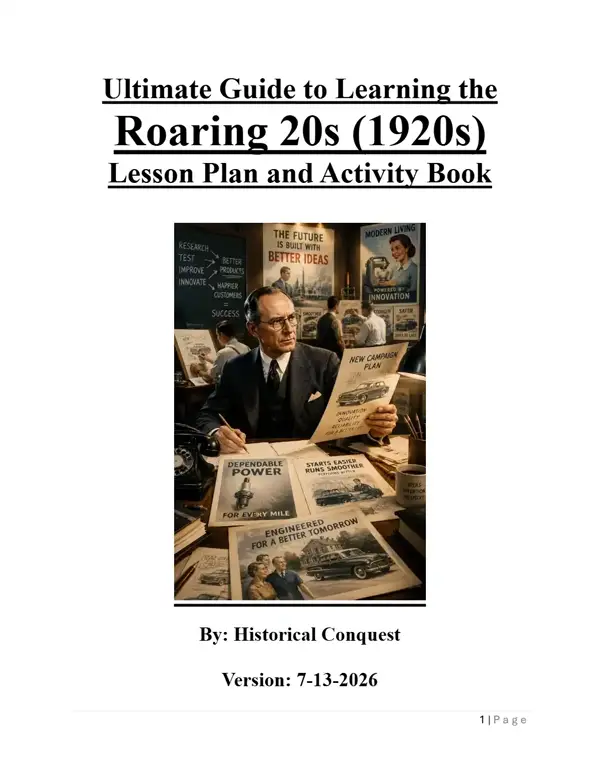
Book 23 — available now
The History of the Roaring 1920s
Ultimate Guide to Learning
The twenty-third book in the curriculum and the fifth of the Late American History set. Sixteen chapters across four weeks — first the road into the decade: the world after the First World War, the Red Scare of 1919–1920, the changing American economy, and health, leisure and everyday life before Prohibition; then culture and social change: jazz and radio, the Harlem Renaissance, women's new vote and new roles, and the sports stars and films of the decade; then the conflicts beneath the prosperity: Prohibition and the gangs, the immigration laws of 1921 and 1924, the Ku Klux Klan as the hearings, courts and newspapers of the time recorded it, and the Scopes trial; and last the end of the decade: the stock market boom, the farmers' and workers' struggles, the crash of October 1929, and what the decade left behind. TWO THINGS TO KNOW BEFORE YOU START. First, the first-person accounts in both printed editions are HISTORICAL FICTION — written to tell the story, informed by the surviving record, and not the words of the people named. Most narrators are real people, but some speak of things that happened after they died, and some meet in conversations that never took place. The record itself is large: the amendments and statutes, the presidents' messages, the court records and verdicts, the hearings of Congress, the census and the Federal Reserve's reports, the newspapers and magazines, and the recordings, films and photographs of the decade — and this course quotes them. Second, at the back of the Ultimate Guide, after the chapters (pages 309–357), there are Cross-Curricular sections — Math, Science, English and Social Studies — and three exams with their keys, to use alongside this course. They are not a fifth week and there is nothing to hand in for them.
- 16 chapters across 4 weeks, grouped by the four weeks of the Ultimate Guide's own outline — Leading to the Twenties, Culture, Entertainment and Social Change, Conflict Beneath the Prosperity, and The End of the Roaring Twenties
- Living books graded K–5, 6–8 and 9–12 for every week
- Primary sources — the records the people of the time made — the AMENDMENTS AND STATUTES as enacted, from the Eighteenth and Nineteenth Amendments to the Volstead Act, the quota laws of 1921 and 1924, the Butler Act and the Agricultural Marketing Act; the PRESIDENTS' MESSAGES, STATEMENTS AND VETOES; the COURT RECORDS, from the Dedham trial and the Dayton transcript to the Capone verdict; the HEARINGS of Congress; the CENSUS and the FEDERAL RESERVE's own bulletins and reports; the NEWSPAPERS AND MAGAZINES of the day, from The Crisis and Survey Graphic to the Ladies' Home Journal; the books written at the time by the people in them; and the RECORDINGS, FILMS AND PHOTOGRAPHS of the decade
- An exam on every chapter, marked instantly
The rest of the series
These books exist and are on sale today. Their lesson programs are being built in the same shape as Ancient America, one book at a time.